New Patient Offer
$79
A $400+ Value
- Exam
- X-rays
- Cleaning
- Treatment Plan


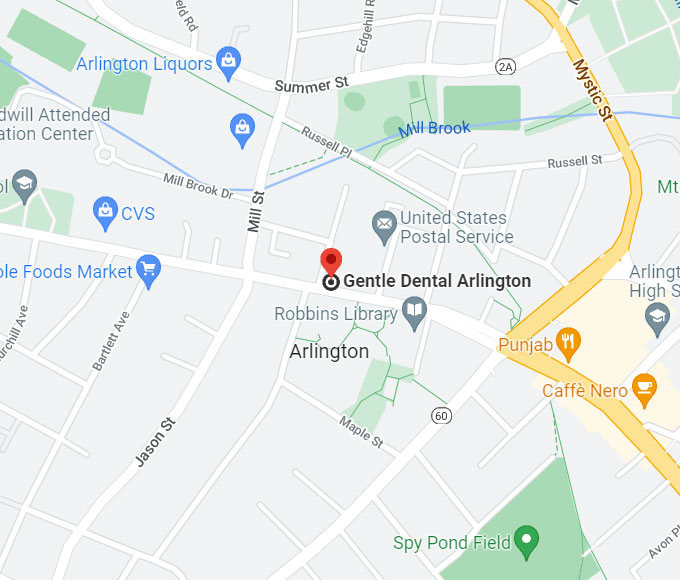
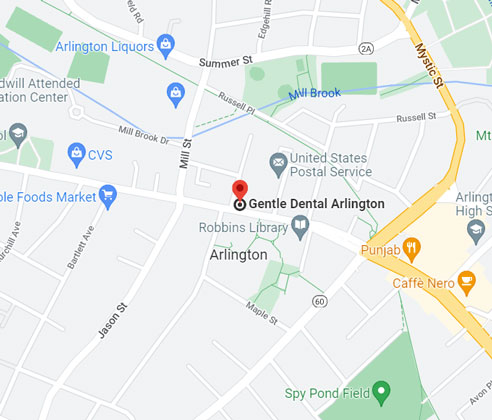
Metered, street-parking available. Can be accessed via MBTA bus, 67, 77, 79.
Metered, street-parking available. Can be accessed via MBTA bus, 67, 77, 79.
Arlington

Great Staff and technicians. The technician that took my bite wing X-rays was very caring, professional and helpful. The doctor provided expert counsel and advice on my dental health & care. Kayla, my hygienist did a terrific job in cleaning and caring for my teeth and gums. Likewise providing recommendations on dental care. Overall I was very pleased with overall experience at Gentle Dental of Arlington, MA🦷
Arlington
I'm very satisfied with all aspect of this location of Gentle Dental in Arlington from the attention and quickness at the front desk to the great dental work done from assistant and Doctor in the back I would recommend this place to all my family and friends. I got full dentures and my smile looks amazing now . thank you
Arlington
The desk staff, the hygienists, the assistants, and the providers, are so kind! Every single person in this office has treated me with so much care and patience. Highly recommend!
A missing tooth can reduce the chewing surface available on one side of your mouth. This may cause you to avoid certain foods or rely more heavily on the opposite side.
A properly fitted bridge provides a stable surface for biting and chewing. The result depends on the number and location of missing teeth, the strength of the supporting teeth and the type of bridge selected.
Teeth next to an open space may gradually shift or tilt toward the gap. A tooth in the opposite arch may also move farther into the open area when it no longer contacts another tooth.
Replacing the missing tooth helps occupy the space and may reduce unwanted movement. Your dentist will evaluate your bite before treatment and check how your upper and lower teeth meet after the bridge is placed.
The replacement teeth in a bridge are shaped and shaded to coordinate with nearby teeth. This can make the gap less noticeable when you smile or speak.
The final appearance depends on the location of the bridge, the surrounding teeth, the gumline and the restorative material. Your dentist will discuss realistic cosmetic expectations during treatment planning.
Missing teeth can affect the way air and the tongue interact when forming certain sounds. Replacing the open space may support clearer pronunciation for some patients.
The bridge may feel unfamiliar immediately after placement. Your tongue, lips and cheeks can require time to adjust to the new tooth shape.
A fixed bridge does not need to be removed for meals or routine daily activities. This may appeal to patients who prefer a restoration that stays in place.
A bridge still requires specific daily cleaning beneath the pontic and around the supporting teeth. Fixed placement does not eliminate the need for ongoing maintenance.
A bridge may replace a tooth lost because of decay, fracture, gum disease, injury or another dental condition. The dentist will first examine the remaining teeth, gums and bone around the space.
When the missing tooth was recently extracted, the area may need time to heal before the final restoration is made. The timing depends on the condition of the tissues and the planned bridge design.
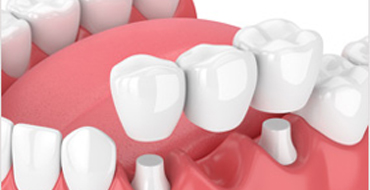
A traditional bridge uses crowns on teeth next to the space. This approach may be considered when those teeth already have large fillings, damage or another reason to benefit from crown coverage.
Preparing healthy supporting teeth for crowns requires the permanent removal of some enamel. Your dentist will explain this consideration and compare alternative replacement options before treatment.
A bridge can sometimes replace several adjacent teeth, but longer spans require greater support. The dentist must consider the number of missing teeth, bite pressure and the health of potential supporting teeth.
An implant-supported bridge may be considered when multiple consecutive teeth are missing and implants can provide suitable support.
Dental bridges can wear, loosen or become damaged over time. Decay or gum problems may also develop around the supporting teeth when plaque accumulates near the restoration.
Schedule an examination when a bridge moves, develops a visible crack, traps food repeatedly or causes discomfort when chewing. The dentist will determine whether it can be adjusted, recemented, repaired or replaced.
Your Arlington dentist will examine the gap, surrounding teeth, gums and bite. The evaluation may include checking existing fillings or crowns and determining whether the potential supporting teeth are stable.
Digital X-rays may be recommended to assess tooth roots, supporting bone and conditions that cannot be fully evaluated through a visual examination. Additional treatment may be needed when decay, infection or gum disease is present.
A dental bridge is one of several ways to replace missing teeth. Depending on the clinical findings, your dentist may also discuss a dental implant or a removable partial denture.
The recommendation will consider:
No single replacement method is appropriate for every patient. Your dentist will explain the advantages, limitations and care requirements of the suitable options.
The design depends on where the missing tooth is located and how the bridge will be supported. The dentist will also consider the shape, shade and size needed to coordinate with nearby teeth.
Bridge materials may include ceramic, porcelain or other dental restorative materials. The final choice will reflect appearance, strength, bite forces and the dentist’s clinical recommendation.
For a traditional bridge, the dentist administers local anesthesia and reshapes the supporting teeth to create room for the crowns. This involves removing a portion of the enamel and cannot be reversed.
The amount of preparation depends on the condition of the teeth and the restoration being made. Teeth that contain decay or damaged material may require additional restorative care.
The dental team records the shape and position of the prepared teeth, the missing-tooth space and the opposing bite. The information is used to create a bridge designed for the treatment area.
Your dentist may also select a shade that coordinates with visible neighboring teeth. The bridge is then produced according to the approved treatment plan.
A temporary bridge may be placed while the final restoration is being made. It protects the prepared teeth, maintains the space and provides a temporary chewing surface.
Temporary cement is intentionally less secure than the material used for the final restoration. Avoid pulling floss upward around the temporary bridge and follow the cleaning and eating instructions provided by the dental team.
Contact the Arlington office if the temporary bridge loosens, breaks or comes off. Do not attempt to repair or permanently reattach it at home.
At a later appointment, the temporary bridge is removed and the prepared teeth are cleaned. The dentist then places the final bridge to examine its fit, shape, shade and contact with nearby teeth.
You may be asked to close your teeth and move your jaw so the dentist can evaluate your bite. Adjustments may be made before the bridge is secured.
Once the fit is acceptable, the bridge is cemented or bonded into position. The dentist removes excess material and checks the restoration again.
You will receive instructions for cleaning under the replacement tooth and around the supporting crowns. Follow-up may be recommended to evaluate your bite, gums and adaptation to the bridge.
An implant-supported bridge follows a different sequence because the dental implants must first be placed in the jaw. Implant surgery, healing and restorative bridge placement occur in separate stages.
The complete timeline varies according to bone health, the number of implants, healing and whether related procedures are required. Your dentist and surgical provider will explain each stage before treatment begins.
Brush the bridge and surrounding teeth with fluoride toothpaste as directed. Pay close attention to the margins where the crowns meet the natural teeth because plaque can collect in these areas.
The supporting teeth remain vulnerable to decay and gum disease. A problem affecting either supporting tooth may also affect the stability of the bridge.
Standard floss cannot pass downward between the connected teeth of a fixed bridge. You may need a floss threader, bridge floss, interdental brush or another tool that reaches beneath the pontic.
Your dentist or hygienist can demonstrate how to guide the cleaning aid beneath the bridge without damaging the gum tissue. Cleaning should extend across the full underside of the restoration.
Your mouth may require time to adjust to the new restoration. Begin with foods that feel manageable and chew carefully until you understand how the bridge contacts the opposing teeth.
Very hard foods, ice and nonfood objects can damage a bridge. Sticky foods may also pull on temporary restorations or place stress on bridge components.
Routine dental visits allow the team to check the bridge, supporting teeth, gums and bite. Digital X-rays may be recommended when the dentist needs to evaluate areas beneath or around the restoration.
Professional cleanings do not replace daily care, but they help remove deposits that are difficult to manage at home.
Schedule an evaluation if you notice:
These concerns do not always mean the bridge must be replaced. An examination is needed to identify the cause and determine the appropriate next step.
A tooth-supported bridge replaces the missing tooth while using crowns or bonded components on neighboring teeth for support. Treatment generally does not require implant surgery.
The condition of the supporting teeth is central to the long-term stability of the restoration. Daily cleaning is required beneath the pontic and around the crowns.
A dental implant replaces the missing root with a post placed in the jawbone. A crown or bridge is then attached after the implant has integrated with the bone.
Implant treatment does not require crowns on adjacent teeth solely to support the replacement. However, it involves surgery, requires suitable bone and gum health and typically takes longer to complete.
A removable partial denture can replace one or several teeth and is taken out for cleaning. It may be considered when a fixed bridge or implant is not appropriate or preferred.
The appliance receives support from the remaining teeth and oral tissues. Fit, maintenance and adaptation differ from those of a fixed bridge.
Your dentist will help you compare these options based on your oral health, missing-tooth pattern and treatment priorities.
Gentle Dental Arlington lists crowns and bridges among its restorative dental services. Patients can receive an examination of the missing-tooth area and discuss whether a fixed bridge fits their needs.
The recommendation will be based on the condition of the supporting teeth, gums and bite rather than the presence of a gap alone.
The Arlington office uses digital X-rays to evaluate teeth and supporting structures when imaging is clinically appropriate. These images may help identify decay, root conditions or bone concerns that could affect bridge treatment.
The office also uses electronic patient charts to maintain examination findings, treatment records and follow-up information.
Gentle Dental Arlington provides crowns and bridges along with dental implants, gum treatment, root canal treatment, oral surgery and dentures. Access to related services helps the team coordinate care when the supporting teeth or the missing-tooth area requires additional treatment.
Outside referral may still be recommended when the patient’s clinical needs require another provider or service.
A single missing tooth, several adjacent missing teeth and an existing damaged bridge do not require identical treatment plans. The dental team can compare tooth-supported bridges, implant-supported restorations and removable alternatives.
This process helps patients understand how each option affects the supporting teeth, treatment sequence, daily care and future maintenance.
Gentle Dental accepts most dental insurance plans, but bridge coverage varies according to the plan, replacement rules and treatment being completed.
The Arlington team can review available benefits and discuss payment options. Patients should complete an examination before requesting treatment-specific cost information because the final recommendation depends on the clinical findings.
Receiving the final bridge is not the end of treatment. Your dentist will explain how to clean the restoration, what changes to watch for and when follow-up care should be scheduled.
Routine exams give the team an opportunity to monitor the bridge, supporting teeth and surrounding gums over time.
Gentle Dental Arlington offers preventive, restorative, emergency, and specialty dental care to help patients protect their oral health and maintain a confident smile.
Yes. Gentle Dental Arlington provides crowns and bridges as part of its restorative dental services. Your dentist will examine the missing-tooth area and determine whether a fixed bridge is suitable.
The dentist evaluates the gap and supporting teeth, prepares the teeth when needed, and takes impressions or digital records. A temporary bridge may be placed while the final restoration is created. The final bridge is then checked, adjusted, and secured.
A bridge may replace one tooth or several adjacent teeth. The number depends on the length of the gap, the strength of the supporting teeth, bite pressure, and whether implants will support the restoration.
Local anesthesia is commonly used when natural supporting teeth must be reshaped for crowns. The specific comfort measures depend on the bridge design and the treatment being completed.
A temporary bridge is often used while a laboratory creates a traditional fixed bridge. It protects the prepared teeth and maintains the space until the final restoration is ready.
The timing depends on the extraction site, gum and bone healing, and the planned bridge design. Your Arlington dentist will examine the area and explain when the final restoration can be completed.
Use a floss threader, bridge floss, interdental brush, or another tool recommended by your dental team. The cleaning aid must pass beneath the replacement tooth to remove plaque and food debris.
Avoid chewing on the affected side and contact Gentle Dental Arlington for an examination. Do not use household glue or attempt to permanently reattach the bridge yourself.
Insurance benefits vary by plan and may include waiting periods, replacement limits, or other conditions. The Arlington office accepts most insurance plans and can help review your available benefits.
Request an appointment through the Gentle Dental website or contact the Arlington office. Mention whether you have a missing tooth, a recently extracted tooth, or a concern involving an existing bridge.
If your request is a dental emergency, or you would like to call and schedule your dental appointment, contact information for our offices can be found here: Gentle Dental Locations. New patient offer not valid for emergency appointments.
What is the difference between a crown and a bridge?There are a lot of different...

