New Patient Offer
$79
A $400+ Value
- Exam
- X-rays
- Cleaning
- Treatment Plan


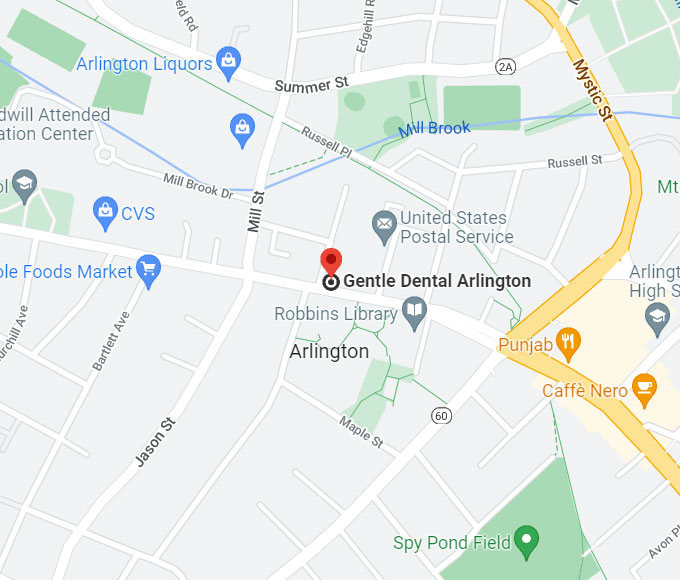
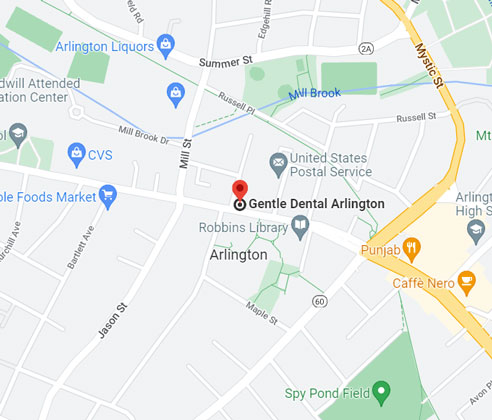
Metered, street-parking available. Can be accessed via MBTA bus, 67, 77, 79.
Metered, street-parking available. Can be accessed via MBTA bus, 67, 77, 79.
Arlington

Great Staff and technicians. The technician that took my bite wing X-rays was very caring, professional and helpful. The doctor provided expert counsel and advice on my dental health & care. Kayla, my hygienist did a terrific job in cleaning and caring for my teeth and gums. Likewise providing recommendations on dental care. Overall I was very pleased with overall experience at Gentle Dental of Arlington, MA🦷
Arlington
I'm very satisfied with all aspect of this location of Gentle Dental in Arlington from the attention and quickness at the front desk to the great dental work done from assistant and Doctor in the back I would recommend this place to all my family and friends. I got full dentures and my smile looks amazing now . thank you
Arlington
The desk staff, the hygienists, the assistants, and the providers, are so kind! Every single person in this office has treated me with so much care and patience. Highly recommend!
A toothbrush can clean the broad surfaces of a tooth but may not reach the bottom of every narrow groove. Sealant material fills these vulnerable areas and creates a smoother surface that is less likely to trap food debris and bacteria.
The sealant protects the treated chewing surface rather than covering the entire tooth. Patients must continue brushing around the gumline, between the teeth and across all untreated surfaces.
Permanent molars are particularly vulnerable after they first appear because their chewing surfaces often have deep grooves. Children may also need time to develop the brushing technique required to clean these teeth thoroughly.
A dentist can evaluate newly erupted molars and determine when they are ready for sealant placement. Applying sealants before decay develops can reduce the likelihood that those grooves will later require restorative treatment.
Sealant placement does not require the removal of healthy tooth structure. The coating bonds directly to the prepared enamel and acts as an additional preventive layer.
The treatment is different from a dental filling. A filling repairs a tooth after decay has damaged the enamel or dentin, while a sealant is generally used to protect a vulnerable chewing surface before a cavity requires restoration.
Children and teenagers frequently receive sealants because newly erupted permanent teeth can be susceptible to decay. Adults may also benefit when they have deep grooves, a history of cavities or other factors that increase their risk.
Age alone does not determine whether sealants are appropriate. Your dentist will evaluate the condition of each tooth before recommending treatment.
The first permanent molars commonly begin to appear during early elementary school, followed by the second permanent molars later in childhood. These teeth can be considered for sealants once they have erupted enough for the dentist to isolate and treat them properly.
The timing varies by child. Your dentist will monitor tooth development during routine examinations and explain when sealants may be useful.
Sealants may sometimes be recommended for baby molars with deep pits and grooves, particularly when the child has an increased risk of cavities. Keeping baby teeth healthy supports chewing, speech and the spacing needed for developing permanent teeth.
Not every baby tooth needs a sealant. The dentist will consider how long the tooth is expected to remain, its current condition and the child’s overall cavity risk.
Teenagers who did not receive sealants when their molars first erupted may still be candidates if the chewing surfaces remain suitable for treatment. The dentist will check for early decay, existing restorations and wear before making a recommendation.
Sealants may also need to be repaired or reapplied when an earlier coating has worn away.
Adults can receive dental sealants when selected molars or premolars have deep grooves that are vulnerable to decay. The tooth must be evaluated to confirm whether a preventive coating is appropriate.
Teeth with existing fillings, crowns or decay that requires restorative treatment may need a different approach.
Your dentist will examine the chewing surfaces of your back teeth and review your history of cavities, oral hygiene, fluoride exposure and other relevant factors. Digital X-rays may be reviewed when the dentist needs information about decay that cannot be seen during the clinical examination.
The dentist will identify which teeth are suitable for sealants. A tooth with a cavity that requires a filling or another restoration will receive a different treatment recommendation.
The tooth is cleaned to remove plaque and debris from its chewing surface. The dental team then keeps the area dry with cotton, gauze or another isolation method.
Moisture control is important because the sealant must bond securely to the enamel. A partially erupted tooth may need to be monitored until it can be kept dry enough for effective placement.
A conditioning solution is placed on the tooth for a short period to prepare the enamel for bonding. The solution is rinsed away and the tooth is dried again.
This step creates a surface that allows the liquid sealant material to flow into the pits and grooves and remain attached to the tooth.
The dentist or hygienist paints the sealant material across the prepared chewing surface. The material flows into the grooves without removing healthy enamel.
Some sealants set on their own, while others are hardened with a dental curing light. The clinical team selects and uses the material according to the condition of the tooth and the product requirements.
After the material has hardened, the dentist checks that the grooves are covered and the sealant is secure. You may be asked to close your teeth together so the dentist can confirm that the treated surface does not interfere with your bite.
The sealant may feel slightly different at first because the chewing surface is smoother. Contact the Arlington office when a treated tooth continues to feel unusually high, rough or uncomfortable.
Most patients can eat and drink normally after the sealant material has set. Your dental team will let you know when a particular material requires different instructions.
Very hard or sticky foods can place stress on sealants and other dental materials. Eating these foods in moderation may help reduce unnecessary wear.
Continue brushing twice a day with fluoride toothpaste and cleaning between your teeth as recommended. Sealants protect only the chewing surfaces on which they are placed.
Plaque can still collect along the gumline, between teeth and around the edges of the coating. Regular home care remains necessary for preventing cavities and gum problems.
Sealants can gradually wear, chip or separate from the tooth. Your dentist will examine them during routine appointments and determine whether they remain intact.
A worn area may be repaired or the sealant may be reapplied when continued protection is appropriate. A damaged sealant does not always cause symptoms, which makes professional monitoring important.
Contact the office when a sealant feels sharp, loose or noticeably different after treatment. You should also schedule an examination if the treated tooth develops pain, prolonged sensitivity or another change.
A dentist must evaluate the tooth to determine whether the sealant needs adjustment or whether a separate dental condition is responsible.
Sealants form a physical barrier over the pits and grooves of a tooth’s chewing surface. They are used to help prevent bacteria and food particles from collecting in areas that are difficult to brush.
The treatment does not strengthen every surface of the tooth and does not replace other preventive services.
Fluoride supports the mineral strength of tooth enamel and can help reduce cavity risk across exposed tooth surfaces. It may be applied professionally or received through fluoride toothpaste and fluoridated water.
A dentist may recommend fluoride and sealants as complementary services because they protect teeth in different ways.
A filling restores tooth structure after decay or damage has created a cavity. The dentist removes the affected material before rebuilding the tooth with an appropriate restorative material.
Sealants and fillings are not interchangeable. Your dentist must examine the tooth to determine whether preventive protection or restorative treatment is needed.
Gentle Dental Arlington offers sealants as part of its preventive care services. The dentist can evaluate the teeth during an examination and determine whether sealants should be coordinated with a cleaning, fluoride treatment or another preventive service.
The recommendation will reflect the patient’s age, tooth development, cavity history and current examination findings.
The Arlington office provides pediatric dentistry and dental care for patients of different ages. Families can coordinate children’s sealant evaluations with routine examinations and cleanings at the same practice.
Adults can also ask the dentist to examine deep grooves in unrestored molars or premolars and determine whether sealant treatment is appropriate.
Gentle Dental Arlington uses digital X-rays and electronic patient charts. When imaging is clinically necessary, digital X-rays can help the dentist evaluate areas that cannot be fully assessed through visual examination alone.
Electronic records allow the team to document which teeth received sealants and review their condition during later appointments.
The Arlington office provides preventive care along with restorative dentistry, pediatric dentistry, orthodontics and oral surgery. When the dentist identifies existing decay or another condition that makes a sealant inappropriate, the team can explain the relevant treatment options.
Some conditions may still require referral depending on the patient’s clinical needs.
Gentle Dental accepts most dental insurance plans, but sealant benefits vary by policy, patient age and tooth. Some plans may apply different conditions to sealants for children and adults.
The Arlington team can review available benefits and discuss payment options. Patients should schedule an examination for tooth-specific treatment and cost information.
Gentle Dental Arlington offers preventive, restorative, emergency, and specialty dental care to help patients protect their oral health and maintain a confident smile.
The tooth is cleaned, dried, and prepared with a conditioning solution. The sealant material is then painted into the chewing grooves, hardened, and checked to confirm that it covers the intended surface without affecting your bite.
No. Children and teenagers commonly receive sealants, but adults may also benefit when they have deep, cavity-prone grooves in back teeth that are suitable for treatment.
Yes. Adults can ask the Arlington dentist to evaluate unrestored molars or premolars for sealants. The recommendation will depend on the condition of the tooth and the patient’s cavity risk.
Sealant placement does not usually require drilling or local anesthesia because the coating is applied to the surface of the enamel. A tooth that has developed a cavity requiring restoration may need a different procedure.
A dentist must first determine whether the tooth has an intact surface, an early noncavitated area, or a cavity that requires restorative treatment. Sealants should not be used as a substitute for a needed filling.
Most patients can eat and drink normally after the sealant has hardened. Follow any specific instructions provided by the Arlington dental team and avoid habits that place unnecessary stress on the treated teeth.
Sealants can provide protection for several years, but their condition varies based on the material, tooth, and chewing forces. Your dentist will check them during routine examinations and repair or reapply them when appropriate.
Insurance benefits vary by plan, patient age, and tooth. The Arlington office accepts most dental insurance plans and can help review your benefits before treatment.
If your request is a dental emergency, or you would like to call and schedule your dental appointment, contact information for our offices can be found here: Gentle Dental Locations. New patient offer not valid for emergency appointments.

Cavity prevention at all ages is key to supporting overall health. Dental sealan...

