New Patient Offer
$79
A $400+ Value
- Exam
- X-rays
- Cleaning
- Treatment Plan


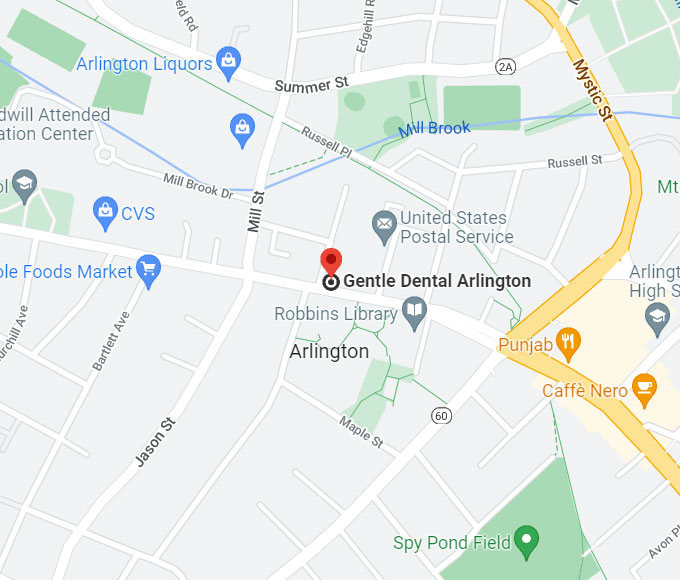
Metered, street-parking available. Can be accessed via MBTA bus, 67, 77, 79.
Metered, street-parking available. Can be accessed via MBTA bus, 67, 77, 79.
Arlington

Great Staff and technicians. The technician that took my bite wing X-rays was very caring, professional and helpful. The doctor provided expert counsel and advice on my dental health & care. Kayla, my hygienist did a terrific job in cleaning and caring for my teeth and gums. Likewise providing recommendations on dental care. Overall I was very pleased with overall experience at Gentle Dental of Arlington, MA🦷
Arlington
I'm very satisfied with all aspect of this location of Gentle Dental in Arlington from the attention and quickness at the front desk to the great dental work done from assistant and Doctor in the back I would recommend this place to all my family and friends. I got full dentures and my smile looks amazing now . thank you
Arlington
The desk staff, the hygienists, the assistants, and the providers, are so kind! Every single person in this office has treated me with so much care and patience. Highly recommend!
An oral cancer screening is a visual and physical examination of the mouth and surrounding areas. Your dentist checks for tissue changes involving the lips, tongue, cheeks, gums, roof and floor of the mouth, throat, jaw and neck.
The examination may focus on:
Many mouth sores and tissue changes are not cancerous. The screening helps your dentist determine whether an area appears normal, should be monitored or requires additional evaluation. A visual and physical examination alone cannot confirm whether abnormal cells are present.
Some areas of the mouth are difficult to see without proper lighting, dental mirrors, and a structured examination. Your dentist can examine beneath the tongue, around the gums, along the cheeks, and toward the back of the mouth for changes you may not have noticed.
Finding an unusual area does not mean that cancer is present. It gives your dentist an opportunity to document the finding and determine whether monitoring or further evaluation is appropriate.
Oral cancer screening can often be incorporated into a routine dental examination. This allows your dentist to evaluate your teeth and gums while also checking the soft tissues of your mouth, throat, and neck.
Including the screening in ongoing preventive care can help establish a record of your oral tissues. Your dentist can compare future findings with earlier examinations when an area changes over time.
If your dentist identifies an unusual sore, patch, lump or area of thickened tissue, you will receive an explanation of what was observed and what should happen next.
The recommended next step may involve monitoring the area, scheduling a follow-up examination or referring you to a healthcare professional who can perform additional testing. The screening itself does not replace a biopsy or specialist evaluation when those services are clinically indicated.
Many patients receive an oral cancer screening as part of a regular dental exam. You do not need to have symptoms or a known risk factor for your dentist to examine the soft tissues of your mouth.
Your dentist will determine how often screening should be completed based on your age, health history, previous findings, and individual risk factors.
Contact the dental office when a sore, lump, irritated area, or patch in your mouth does not improve. Other changes that should be discussed with a dentist include persistent mouth pain, unexplained bleeding, difficulty swallowing, changes in your voice, or a feeling that something is caught in your throat.
These changes can have many possible causes and do not automatically indicate cancer. A dental examination can help determine whether monitoring, treatment, or referral is appropriate.
Certain factors can increase the risk of oral cancer, including tobacco use, heavy alcohol use, a history of human papillomavirus infection, and significant sun exposure involving the lips.
Tell your dentist about your health history and tobacco or alcohol use, even when you do not currently have symptoms. This information helps the dentist assess your needs without making assumptions about your risk.
Your dentist may recommend another examination when an earlier screening identified an area that was expected to heal or resolve. A follow-up visit allows the dentist to determine whether the area has disappeared, remained unchanged or developed additional features that require evaluation.
Do not wait for a routine checkup when an existing area becomes larger, more painful, or noticeably different.
Your dentist will review relevant medical information and ask whether you have noticed any changes in your mouth, throat, or neck. You should mention sores, patches, swelling, tenderness, numbness, swallowing difficulty, or other concerns, including changes that come and go.
Tell the dental team about medications, previous cancer treatment, HPV history, tobacco use, and alcohol use when they are relevant. This information helps the dentist understand your risk factors and focus the examination.
The dentist examines your lips and the inside of your mouth under appropriate lighting. You may be asked to move your tongue so the dentist can inspect its sides and underside as well as the floor of your mouth.
The examination may also include your gums, cheeks, palate, and the visible portion of your throat. The dentist looks for sores, color changes, and tissue that appears different from the surrounding area.
The dentist may gently feel the tissues inside your mouth to check for thickened areas, tenderness, or lumps that are not clearly visible. The dentist may also feel beneath your jaw and along your neck for swelling or other changes.
Tell the dentist when an area feels sore or sensitive. The physical examination should not involve cutting or removing tissue.
Your dentist can usually explain the screening findings immediately after the examination. When no concerning changes are identified, you can continue with the preventive schedule recommended for your oral health needs.
When an area needs attention, the dentist will explain its location and appearance. The next step may involve monitoring, a follow-up appointment, or referral for additional assessment.
An oral cancer screening generally does not require special preparation. You can brush and floss normally before your visit.
Prepare a list of medications and relevant medical conditions, especially when you are visiting the Arlington office for the first time. You should also make note of any oral change you have noticed, including when it began and whether it has changed.
Avoid applying medication or other products to a concerning area immediately before the appointment unless a healthcare professional has directed you to do so. This can help the dentist view the tissue in its current condition.
The dentist may ask you to remove removable dentures or oral appliances so the underlying tissues can be examined. You may also be asked to open your mouth, extend your tongue, or move your jaw during different parts of the screening.
The examination is generally brief and does not typically require anesthesia. Tell the dentist if you have a sensitive area, a strong gag reflex, or difficulty keeping your mouth open.
A standard visual and physical screening usually does not require recovery or changes to your normal activities. You may eat, drink, and continue your usual oral hygiene routine after the appointment unless you receive separate instructions.
Follow any monitoring or referral recommendations provided by your dentist. A normal screening does not guarantee that oral cancer is absent, so you should continue to report new or persistent changes.
Some oral changes result from irritation, accidental biting, infection, or another noncancerous condition. Your dentist may recommend allowing time for the area to heal before checking it again.
The dentist may document the size, color, and location of the area so it can be compared at a follow-up examination. Attend the recommended follow-up even when the area is not painful.
Your dentist may refer you to an oral surgeon, oral medicine provider, ear, nose, and throat specialist, or another appropriate healthcare professional when an area requires further assessment.
A referral does not confirm that the finding is cancerous. It allows a provider with relevant expertise to examine the area and determine whether additional testing is necessary.
A biopsy involves removing cells or a small tissue sample for examination in a laboratory. Laboratory analysis is needed to determine whether cancer cells are present.
An oral cancer screening does not include a biopsy unless a separate procedure has been planned. The provider responsible for the additional evaluation will explain the procedure, preparation, and follow-up requirements.
Look for changes involving your lips, tongue, gums, and cheeks as part of your normal oral hygiene routine. Contact the office when an unusual area does not improve or when you develop a new concern.
A home check can help you notice changes, but it does not replace a professional examination.
Routine dental visits give your dentist an opportunity to monitor your teeth, gums, and oral tissues over time. Your recommended schedule will depend on your oral health, medical history, and previous findings.
Do not postpone an examination solely because a change is not painful. Some oral conditions may develop without causing early discomfort.
Your dentist can discuss oral health risks associated with tobacco, alcohol, and sun exposure involving the lips. Patients who want to stop using tobacco should ask a healthcare professional about appropriate cessation support.
Risk reduction does not eliminate the need to report unusual changes or attend recommended dental examinations.
Oral cancer screening is available as part of the preventive dental services provided at Gentle Dental Arlington. Patients can coordinate the screening with a dental exam, cleaning, or another appropriate preventive visit.
Your dentist will determine what should be included based on your health history, concerns, and examination findings.
The Arlington office provides preventive, restorative, orthodontic, and oral surgery services. When an examination identifies another dental concern, the team can help coordinate the appropriate next step.
Some findings may still require referral to an outside medical or dental specialist. The recommended provider will depend on the type and location of the tissue change.
The Arlington office uses electronic patient charts to maintain examination findings and treatment history. These records can help the dental team review previous concerns and monitor documented changes over time.
Digital X-rays are also available for dental diagnosis when clinically necessary. However, X-rays do not replace the visual and physical soft-tissue examination used during an oral cancer screening.
Gentle Dental Arlington has provided dental services to the local community for more than 50 years. The office has also received recognition through the Wicked Local Readers’ Choice Awards.
The practice combines its local history with access to preventive and multi-specialty dental services at one Arlington location.
Gentle Dental accepts most dental insurance plans, but benefits for examinations, screenings, and follow-up services vary. The office team can help review your plan and explain available payment options.
A separate referral, biopsy, or specialist evaluation may be subject to different benefits. Contact your insurance provider for treatment-specific coverage information.
Gentle Dental Arlington offers preventive, restorative, emergency, and specialty dental care to help patients protect their oral health and maintain a confident smile.
The dentist checks the lips, tongue, cheeks, gums, roof and floor of the mouth, visible throat, jaw, and neck. The examination looks for unusual sores, patches, lumps, swelling, and tissue changes.
No. A screening helps identify areas that may need closer evaluation, but it cannot confirm a cancer diagnosis. A biopsy and laboratory examination are generally required to determine whether cancer cells are present.
No special preparation is generally required. Brush and floss normally, bring an updated medication list, and tell the dentist about any persistent changes or concerns involving your mouth, throat, or neck.
The screening primarily involves looking at and gently feeling the tissues of your mouth, jaw, and neck. It does not normally involve injections or tissue removal. Tell the dentist when an area feels sensitive.
Yes. Oral cancer screening may be completed as part of a routine dental examination at Gentle Dental Arlington. Your dentist will determine the appropriate examination based on your needs and health history.
The dentist may document the area, schedule a follow-up examination or refer you to an appropriate specialist. An unusual finding does not automatically mean that cancer is present.
Your dentist may recommend more frequent evaluation based on previous findings, tobacco use, heavy alcohol use, HPV history, significant sun exposure involving the lips, or other individual factors.
Insurance benefits vary by plan and by how the screening is billed. The Arlington office accepts most dental insurance plans and can help review your benefits before your appointment.
If your request is a dental emergency, or you would like to call and schedule your dental appointment, contact information for our offices can be found here: Gentle Dental Locations. New patient offer not valid for emergency appointments.
What is an oral cancer screening?When you visit your dentist for a regular check...

