New Patient Offer
$79
A $400+ Value
- Exam
- X-rays
- Cleaning
- Treatment Plan


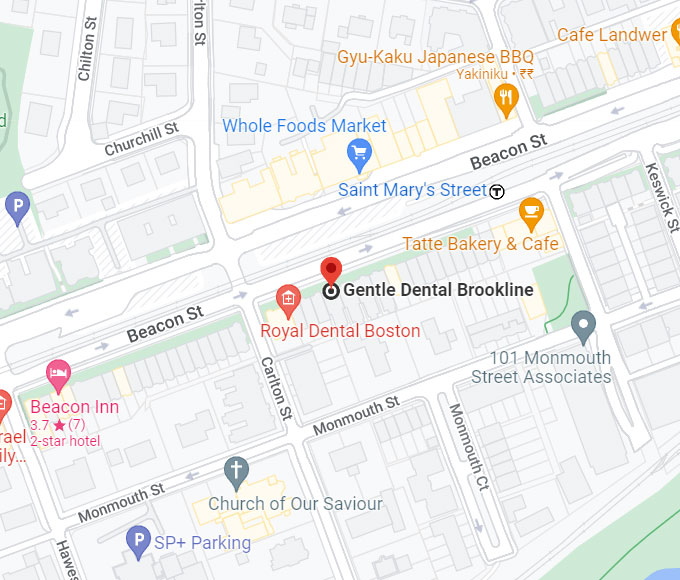
Metered street parking available. Located at Saint Mary’s Street stop on the MBTA C-Line.
Metered street parking available. Located at Saint Mary’s Street stop on the MBTA C-Line.
Brookline

Great experience and conveniently located. I was staying in Brookline and I wanted to find dentists in my area to establish a relationship with. After doing some much research I found Gentle Dental in Brookline to be the most convenient for my needs. The dentist that examined my teeth was very nice and courteous and the dentist hygienist did an excellent job removing some of the noticeable stains on my teeth. They also accept most insurances it appears and would’ve accepted mine had I already not reached my insurance’s annual threshold for cleanings and examinations. Therefore I ended up taking advantage of their new patient promotion that they had going on because it was a great deal! Way better than the dental promotions that I’ve seen or used in Kentucky. It’s obvious that Massachusetts care a lot about oral health. I would recommend this office to anyone out of town or resident.
Brookline
I had such a great experience at this office, Dr. Zelkha did an amazing job on my filling and crown and was very communicative and caring during the whole process. The office employees were also very welcoming and made me feel comfortable asking lots of questions. I’ve had some pretty bad dental experiences in the past and feel very lucky to have found this office, definitely will recommend if you are looking for a new office.
Brookline
I love this office! The staff is wonderful and Dr. Zelkha is awesome! I recommend this place because even if the dentist scares you a little, he will make you laugh and it will be 100% worth it!
A bridge may be considered when one tooth or several neighboring teeth are missing and suitable support is available around the gap.
The length and location of the space influence which restoration can provide appropriate stability. Larger spaces may require a different design or another tooth replacement option.
A traditional bridge may be practical when the teeth beside the gap already have large fillings, fractures or damage that would benefit from crown coverage.
The crowns can strengthen the treated teeth while supporting the artificial tooth between them. The dentist will still assess whether each tooth has enough healthy structure and periodontal support.
Missing teeth can make it difficult to break down certain foods or may cause patients to favor the opposite side of the mouth.
A properly planned bridge can restore contact in the affected area and distribute chewing pressure more evenly across the bite.
Teeth next to an open space may tilt or move toward the gap over time. Teeth in the opposite arch may also move when normal contact is missing.
Replacing the tooth can help maintain the available space and reduce unwanted changes in tooth position.
Some patients prefer a restoration that remains in place rather than one that must be removed for cleaning.
A fixed bridge may meet this preference when the supporting teeth, gums and bite are suitable. Patients must still clean beneath and around the bridge every day.
A missing tooth can reduce the number of surfaces available for chewing. A bridge replaces the absent tooth and helps food contact both sides of the bite more evenly.
The amount of function restored depends on the location of the bridge, the number of teeth being replaced and the strength of its supporting teeth.
Some missing teeth can affect the way air moves through the mouth or how the tongue contacts the teeth during speech.
A replacement tooth can restore part of the structure used to form certain sounds. The adjustment period varies according to the size and location of the bridge.
The teeth surrounding an open space can gradually move toward it. These changes may alter the bite or create areas where plaque and food collect.
A bridge fills the available space and helps neighboring teeth maintain their positions.
The artificial teeth in a bridge are shaped and shaded to coordinate with the surrounding teeth.
The dentist will consider the visible tooth proportions, gumline, available space and color of neighboring teeth when planning the restoration.
A fixed bridge remains attached to its supporting teeth or implants during eating, speaking and daily activities.
Patients do not remove the bridge at home, but they must use appropriate flossing tools to clean beneath the replacement tooth.
Your dentist will examine the missing-tooth space, neighboring teeth, gum tissue and bite. The evaluation may also include checking existing fillings, crowns and the stability of potential supporting teeth.
Digital X-rays may be used to examine the roots and bone around the teeth. These findings help the dentist determine whether the proposed abutment teeth can support a bridge.
The dentist will also discuss other replacement options when appropriate. Understanding the advantages and limitations of bridges, implants and removable partial dentures can help you make an informed decision.
For a traditional bridge, the treatment area is numbed before the supporting teeth are prepared.
A portion of the outer tooth structure is removed to create room for the crowns that will anchor the bridge. The amount of preparation depends on the teeth, bridge material and treatment plan.
Any decay or damaged restorative material must be addressed before the bridge is completed. A tooth may need additional treatment when its structure or dental pulp has been affected.
The dentist will take impressions or a digital scan to record the prepared teeth, open space and surrounding bite.
Gentle Dental Brookline has iTero 3D scanning technology that may be used when appropriate for the restoration. The dental laboratory or restoration provider uses the records to create a bridge that fits the prepared teeth and coordinates with the opposing arch.
The dentist may also select a shade that blends with the visible neighboring teeth.
A temporary bridge may be placed while the permanent restoration is being created.
The temporary restoration protects the prepared teeth, maintains the open space and provides limited function between appointments. It is attached with temporary cement so the dentist can remove it when the permanent bridge is ready.
Avoid hard, sticky or excessively chewy foods that could loosen or damage the temporary bridge. Contact the office if the restoration moves or comes out.
The dentist may need to evaluate the bridge framework, contacts or preliminary fit before final placement.
This step allows the clinician to check how the bridge sits on the supporting teeth and whether adjustments are needed before the restoration is completed.
The specific sequence varies according to the bridge material, laboratory process and complexity of treatment.
The temporary bridge is removed and the supporting teeth are cleaned. The permanent bridge is then positioned so the dentist can assess its fit, appearance and contact with neighboring teeth.
Your bite will be checked to identify areas where the bridge meets the opposing teeth too heavily. The dentist can make adjustments before securing the bridge with dental cement.
The dental team will explain how to brush, floss beneath the replacement tooth and monitor the supporting teeth after placement.
The bridge may feel different from your natural teeth when it is first placed. Your tongue, cheek muscles and bite may need time to adapt to the new contours.
Contact Gentle Dental in Brookline if the bridge feels unusually high, creates persistent pressure or makes it difficult to close your teeth normally.
Standard floss cannot pass directly between the connected parts of a fixed bridge.
A floss threader, bridge floss, interdental brush or water flosser may help clean beneath the pontic and around the supporting crowns. Your dental team can demonstrate which method fits the available space.
Removing plaque from these areas helps protect the gums and supporting teeth.
Brush the bridge, gumline and remaining teeth at least twice a day using a soft-bristled toothbrush and fluoride toothpaste.
Pay close attention to the edges where the bridge meets the natural teeth. Cavities can still develop in the supporting teeth when plaque remains around the crown margins.
Chewing ice, biting hard objects or using your teeth to open packaging can damage the bridge or supporting teeth.
Patients who grind or clench their teeth may need an evaluation for a protective night guard. Your dentist will determine whether an appliance is appropriate for your bite and restoration.
Routine appointments allow the dental team to inspect the bridge, supporting teeth and surrounding gums.
The dentist can check for looseness, wear, decay or changes in the bite. Professional cleaning also removes buildup from areas that are difficult to maintain at home.
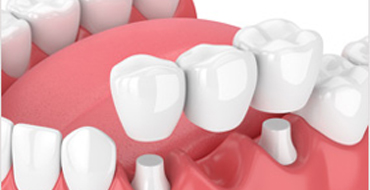
A fixed bridge uses neighboring teeth or implants to support one or more artificial teeth.
A traditional bridge does not require implant surgery, but it generally requires preparation of the supporting natural teeth.
A dental implant replaces the missing tooth root and supports a crown, bridge or another restoration.
Implant treatment requires sufficient bone and healthy gum tissue. It also involves surgical placement and a separate healing period before the final restoration can be completed.
A partial denture replaces one or more teeth and can be removed by the patient for cleaning.
It may be considered when several teeth are missing, fixed support is limited or the patient prefers a removable treatment option.
Your Brookline dentist will compare the condition of your teeth, gums, bone and bite before recommending a replacement method.
Gentle Dental Brookline offers crowns and bridges as part of its restorative dental services.
Patients can complete an examination at the office and receive a treatment plan based on the missing-tooth space, supporting teeth and overall oral health.
Digital X-rays may be used to evaluate the roots and bone around potential abutment teeth.
This information helps the dentist identify decay, previous root canal treatment, bone loss or other concerns that may influence whether a tooth can support a bridge.
The Brookline office has iTero 3D scanning technology.
Digital scans may help record tooth surfaces and bite relationships when appropriate for restorative planning. The dentist will determine whether a scan or conventional impression is suitable for your bridge.
The Brookline location provides crowns and bridges, dental implants, gum treatments, root canal treatment and other restorative services.
Access to related care can support treatment coordination when a potential abutment tooth has gum disease, an infection, structural damage or another condition that must be addressed before bridge placement.
A dental bridge is not automatically the right replacement for every missing tooth.
The Brookline team can evaluate whether a bridge, implant, partial denture or continued monitoring is appropriate based on the location of the gap and condition of the surrounding structures.
A bridge depends on healthy supporting teeth and gums.
Dental examinations, professional cleanings and home-care guidance help the Brookline team monitor the restoration and identify concerns that could affect its stability.
Gentle Dental Brookline offers evening appointments on selected weekdays and Saturday office hours.
Availability for bridge consultations and restorative procedures depends on the required appointment length and provider schedule.
Gentle Dental accepts many dental insurance plans. Benefits for dental bridges vary according to the plan, missing-tooth provisions, supporting procedures and replacement limitations.
The Brookline office can help review available benefits. Patients should schedule an evaluation for treatment-specific recommendations and cost information.
Gentle Dental in Brookline offers preventive, restorative, emergency, and cosmetic dentistry to help patients protect their oral health and maintain a confident smile.
Yes. Gentle Dental Brookline offers custom crowns and bridges for damaged or missing teeth. Your dentist will examine the open space and potential supporting teeth before recommending a bridge design.
A bridge may replace one tooth or several neighboring teeth. The number of teeth that can be replaced depends on the length of the gap, strength of the supporting teeth, bite pressure and proposed bridge design.
A fixed dental bridge cannot be removed by the patient. Only a dentist can remove it. Removable partial dentures are a separate tooth replacement option that patients take out for cleaning.
The supporting teeth are usually numbed during preparation. Some temporary sensitivity or gum tenderness may occur after treatment. Tell your dentist if discomfort becomes severe or does not improve.
A traditional bridge generally requires several visits for tooth preparation, impressions or scanning, temporary restoration, fit checks and final placement. The exact sequence depends on the bridge design and laboratory process.
Use a floss threader, bridge floss, interdental brush or another tool recommended by your dental team. Cleaning beneath the artificial tooth and around the supporting crowns helps prevent gum inflammation and decay.
Yes. Contact the Brookline office if your bridge loosens, fractures or becomes uncomfortable. The dentist will determine whether it can be recemented, repaired or needs replacement.
Dental insurance benefits vary by plan. Coverage may depend on waiting periods, missing-tooth clauses, frequency limitations and supporting procedures. The office can help review your available benefits.
If your request is a dental emergency, or you would like to call and schedule your dental appointment, contact information for our offices can be found here: Gentle Dental Locations. New patient offer not valid for emergency appointments.
What is the difference between a crown and a bridge?There are a lot of different...

Just about everyone hopes to keep all of their adult teeth forever. However, in ...

