New Patient Offer
$79
A $400+ Value
- Exam
- X-rays
- Cleaning
- Treatment Plan


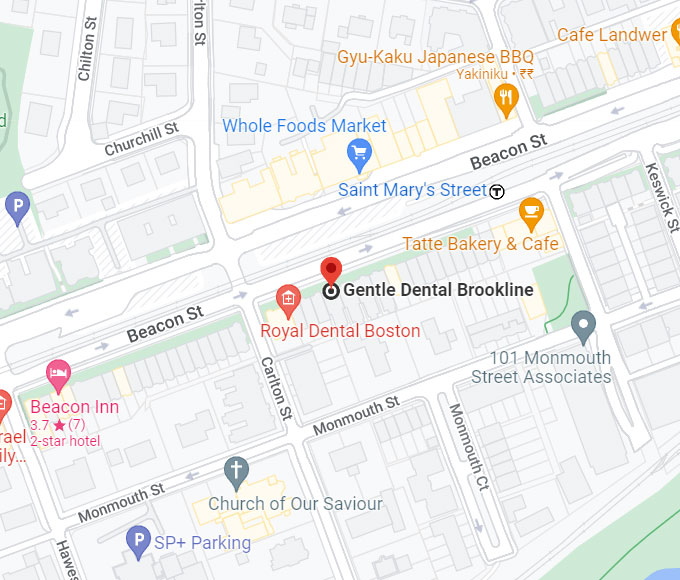
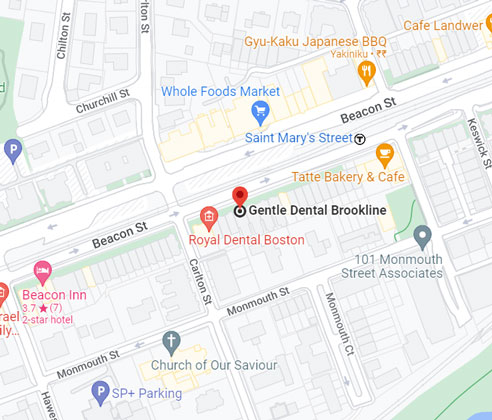
Metered street parking available. Located at Saint Mary’s Street stop on the MBTA C-Line.
Metered street parking available. Located at Saint Mary’s Street stop on the MBTA C-Line.
Brookline

Great experience and conveniently located. I was staying in Brookline and I wanted to find dentists in my area to establish a relationship with. After doing some much research I found Gentle Dental in Brookline to be the most convenient for my needs. The dentist that examined my teeth was very nice and courteous and the dentist hygienist did an excellent job removing some of the noticeable stains on my teeth. They also accept most insurances it appears and would’ve accepted mine had I already not reached my insurance’s annual threshold for cleanings and examinations. Therefore I ended up taking advantage of their new patient promotion that they had going on because it was a great deal! Way better than the dental promotions that I’ve seen or used in Kentucky. It’s obvious that Massachusetts care a lot about oral health. I would recommend this office to anyone out of town or resident.
Brookline
I had such a great experience at this office, Dr. Zelkha did an amazing job on my filling and crown and was very communicative and caring during the whole process. The office employees were also very welcoming and made me feel comfortable asking lots of questions. I’ve had some pretty bad dental experiences in the past and feel very lucky to have found this office, definitely will recommend if you are looking for a new office.
Brookline
I love this office! The staff is wonderful and Dr. Zelkha is awesome! I recommend this place because even if the dentist scares you a little, he will make you laugh and it will be 100% worth it!
Gingivitis is the earliest stage of gum disease. The gums may appear red or swollen and may bleed during brushing, flossing or a dental examination.
Professional cleaning, improved home care and management of contributing factors may help reverse gingivitis before the condition progresses to involve the supporting bone.
Healthy gums fit closely around the teeth. Gum disease can cause the tissue to pull away and form periodontal pockets where plaque and bacteria collect.
Your dentist or hygienist may recommend treatment when pocket measurements indicate that routine brushing, flossing and preventive cleaning cannot adequately maintain the area.
Plaque that remains on the teeth can harden into tartar. Once tartar forms below the gumline, it cannot be removed with a toothbrush or dental floss.
Scaling and root planing may be recommended to remove these deposits from the tooth roots and create smoother surfaces that are easier for the gums to heal against and for patients to maintain.
Periodontitis can affect the tissues and bone that support the teeth. Dental X-rays and periodontal measurements may reveal changes that are not obvious during daily brushing.
Treatment may be recommended to slow additional damage, improve access for cleaning and help preserve teeth that still have adequate support.
Occasional irritation can have several causes, but gums that bleed regularly or remain inflamed should be evaluated.
The dental team will identify whether the concern is related to gingivitis, periodontitis, brushing technique, medication, a dental restoration or another oral health condition before recommending care.
Periodontal treatment removes plaque, tartar and bacterial deposits from areas that home care cannot reach.
Reducing these deposits helps control the source of inflammation and creates an environment that is easier to maintain through brushing, interdental cleaning and professional follow-up.
Advanced gum disease can damage the gum attachment and bone surrounding the teeth. Treatment cannot automatically replace support that has already been lost, but it may help control the disease and reduce the likelihood of continued damage.
Regular reassessment allows your dental team to monitor changes in pocket depth, gum condition and tooth stability.
Deep pockets, swelling and tartar buildup can make it difficult to clean thoroughly around the gumline.
Treatment can improve access to tooth surfaces and allow your dental team to recommend brushes, flossing methods or interdental tools that match your specific needs.
Bleeding and swollen gums often reflect irritation caused by plaque bacteria. Removing buildup and improving daily plaque control may reduce inflammation as the tissue responds to treatment.
Results vary according to the stage of gum disease, health factors, tobacco use and the consistency of follow-up care.
Untreated periodontitis can weaken the support around teeth and may eventually contribute to mobility or tooth loss.
Managing the condition through professional treatment and periodontal maintenance can help patients retain teeth that remain treatable and maintainable.
Patients with gingivitis may benefit from a professional cleaning that removes plaque and tartar above and around the gumline.
The dental team will also review brushing, flossing and other daily care techniques. Consistent home care is necessary because professional cleaning does not prevent plaque from forming again.
Scaling and root planing is a nonsurgical deep cleaning used to treat periodontal pockets and remove deposits below the gumline.
Scaling removes plaque and tartar from the tooth surfaces and roots. Root planing smooths rough areas on the roots that can retain bacteria and interfere with the gum tissue’s ability to adapt to the tooth.
The treatment may be completed in sections of the mouth based on the number of areas involved and the depth of treatment needed. A local anesthetic may be used to improve comfort during the procedure.
Some treatment plans may include an antimicrobial rinse, medication placed in a periodontal pocket or another method of controlling bacteria.
These treatments are not necessary for every patient and do not replace mechanical removal of plaque and tartar. Your dentist or periodontal provider will determine whether an adjunctive treatment is appropriate.
After active gum disease treatment, many patients need periodontal maintenance rather than returning immediately to routine preventive cleanings.
A maintenance visit may include periodontal measurements, removal of deposits above and below the gumline and evaluation of areas that previously showed deeper pockets or inflammation.
The timing of these visits depends on your response to treatment, disease severity, home care and individual risk factors.
Advanced periodontitis may require surgical treatment when deep areas cannot be adequately accessed through nonsurgical therapy.
Possible procedures can include pocket reduction surgery, gum grafting, bone grafting or regenerative treatment. The recommended approach depends on the location and extent of tissue or bone damage.
Your Brookline dental team will explain whether specialty evaluation or coordinated surgical care is appropriate after completing the necessary examination and imaging.
Your appointment begins with a review of your dental concerns, previous gum treatment, oral hygiene routine and medical history.
Tell the dental team about medications, tobacco use, diabetes, pregnancy, dry mouth and other conditions that may influence gum health or treatment planning. This information helps the clinician assess risk factors and plan care safely.
The dental team will inspect the gums for inflammation, bleeding, recession and changes in contour. A small periodontal probe may be used to measure the spaces between the teeth and gum tissue.
Measurements are recorded at several points around each tooth. These findings help identify which areas can be maintained with routine care and which may require deeper treatment.
Digital X-rays may be recommended when the dentist needs to evaluate the bone supporting the teeth or identify deposits and dental concerns that are not visible during the clinical examination.
The imaging findings are considered alongside pocket depth, bleeding, tooth mobility and gum recession when developing the treatment plan.
Your dental team will explain whether the findings are consistent with gingivitis, periodontitis or another gum condition.
The plan may identify which areas need cleaning, whether scaling and root planing is appropriate and when the gums should be reassessed. More advanced findings may require coordination with a periodontal specialist.
Before scaling and root planing, the treatment area may be numbed with a local anesthetic. Your clinician will explain which sections of the mouth will be treated and whether more than one appointment may be required.
Patients should share any changes in medications or health conditions before treatment. Follow any procedure-specific instructions provided by the Brookline dental team.
During scaling, the clinician uses dental instruments to remove plaque and hardened tartar from the teeth and root surfaces.
Manual or ultrasonic instruments may be used depending on the location of the deposits and the treatment required. The procedure focuses on areas that cannot be reached through routine home care.
Root planing removes remaining deposits and smooths irregular areas on the roots.
Smoother root surfaces are less likely to retain plaque and may allow inflamed gum tissue to adapt more closely to the teeth during healing.
After treatment, the dental team will explain how to brush, clean between the teeth and care for treated areas.
A follow-up evaluation may be scheduled after the tissue has had time to respond. The clinician may repeat periodontal measurements and determine whether inflammation has improved or additional treatment is needed.
The gums may feel tender after deep cleaning, and the teeth may be temporarily sensitive to temperature or pressure.
Use medications or rinses only as instructed. Contact the dental office when discomfort becomes severe, continues to worsen or does not respond to the recommended care.
Choose foods that are comfortable to chew if the gums remain sensitive after treatment.
Avoid placing hard, sharp or very hot foods directly against a tender area. You can gradually return to your usual diet as comfort improves unless your clinician provides different instructions.
Continue cleaning your teeth as directed because plaque can begin accumulating again soon after treatment.
Your dental team may recommend a soft-bristled toothbrush, dental floss, interdental brushes or another cleaning aid based on the spacing between your teeth and the condition of your gums.
Smoking and other tobacco use can affect gum healing and increase the risk of periodontal disease progression.
Tell your dental team if you use tobacco so they can consider this factor when developing your treatment and maintenance plan.
A periodontal reassessment helps determine how the gum tissue has responded to treatment.
Your clinician may review bleeding, inflammation, pocket measurements and home care. Areas that remain difficult to maintain may need additional nonsurgical treatment, specialty evaluation or another approach.
Gum disease requires long-term management even after the active infection has been brought under better control.
The frequency of periodontal maintenance is based on your condition and risk level. These visits support professional cleaning, early detection of recurring inflammation and continued adjustment of your home care routine.
Gentle Dental in Brookline lists gum treatments among the restorative and specialty services available at the office.
Patients can begin with an examination and periodontal assessment before the team recommends a professional cleaning, scaling and root planing, maintenance care or additional specialty evaluation.
Gentle Dental operates as a multispecialty dental practice and provides periodontal care for patients with gum disease.
This structure supports coordination between dentists, hygienists and specialty providers when a patient’s condition involves both gum health and other dental treatment needs.
The Brookline office offers digital X-rays that may be used to evaluate bone levels and other conditions surrounding the teeth.
X-rays are recommended according to clinical need and are considered together with periodontal measurements and examination findings.
Gingivitis and periodontitis do not require the same approach. The dental team evaluates the extent of inflammation, pocket depth and supporting bone before recommending treatment.
This allows the care plan to focus on the areas that need professional intervention without assuming every patient requires surgical treatment.
The Brookline office provides preventive, restorative and specialty dental services.
Coordinated care can be helpful when gum disease affects a tooth with decay, a crown, a bridge or another restoration that must be considered during treatment planning.
Managing gum disease does not end when deep cleaning is completed.
Follow-up evaluation and periodontal maintenance allow the dental team to monitor tissue response, identify recurring inflammation and revise the care plan when necessary.
The Brookline office provides emergency dental evaluations for urgent oral health concerns.
Patients who develop significant gum swelling, persistent bleeding, drainage, severe discomfort or a loose tooth can contact the office. Appointment timing depends on clinical need and current availability.
Gentle Dental works with many dental insurance plans. Benefits for periodontal examinations, scaling and root planing, maintenance and surgical treatment vary by plan.
The Brookline office can help review available benefits and discuss payment options. Patients should schedule an evaluation for treatment-specific recommendations and cost information.
Gentle Dental in Brookline offers preventive, restorative, emergency, and cosmetic dentistry to help patients protect their oral health and maintain a confident smile.
Yes. Gentle Dental in Brookline provides gum treatments, periodontal evaluation, and nonsurgical care such as scaling and root planing. The dental team will determine whether additional specialty treatment is appropriate.
The dental team may review your health history, examine the gums, measure periodontal pockets, and take digital X-rays when needed. These findings help determine the stage and extent of the condition.
Gingivitis may improve and can often be reversed when plaque and tartar are removed before the supporting bone is damaged. Professional cleaning and consistent brushing and interdental cleaning are important parts of care.
A local anesthetic may be used during scaling and root planing to reduce discomfort. Temporary gum tenderness or tooth sensitivity can occur afterward. Your clinician will provide instructions based on the treatment completed.
The schedule depends on your disease severity, response to treatment, health factors, and ability to control plaque at home. The Brookline dental team will recommend an interval after evaluating your gums.
Insurance benefits vary by plan and treatment. The office can help review benefits for periodontal evaluations, deep cleaning, and maintenance, but coverage cannot be guaranteed.
If your request is a dental emergency, or you would like to call and schedule your dental appointment, contact information for our offices can be found here: Gentle Dental Locations. New patient offer not valid for emergency appointments.

Experiencing tender, puffy, and bleeding gums? These can be signs and symptoms o...

Bumps or sores can be truly uncomfortable, especially when they occur in your mo...

