New Patient Offer
$79
A $400+ Value
- Exam
- X-rays
- Cleaning
- Treatment Plan


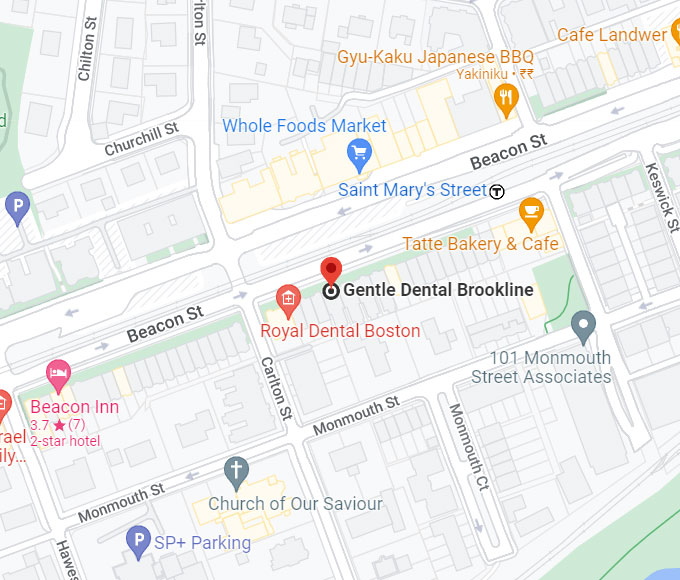
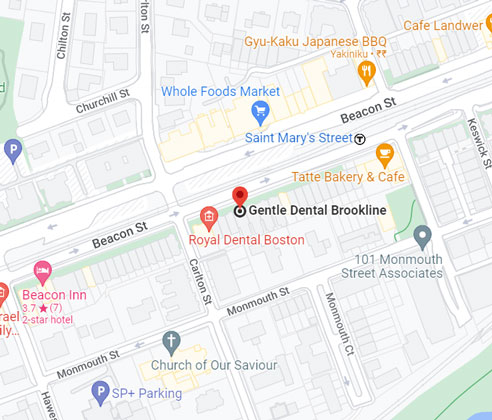
Metered street parking available. Located at Saint Mary’s Street stop on the MBTA C-Line.
Metered street parking available. Located at Saint Mary’s Street stop on the MBTA C-Line.
Brookline

Great experience and conveniently located. I was staying in Brookline and I wanted to find dentists in my area to establish a relationship with. After doing some much research I found Gentle Dental in Brookline to be the most convenient for my needs. The dentist that examined my teeth was very nice and courteous and the dentist hygienist did an excellent job removing some of the noticeable stains on my teeth. They also accept most insurances it appears and would’ve accepted mine had I already not reached my insurance’s annual threshold for cleanings and examinations. Therefore I ended up taking advantage of their new patient promotion that they had going on because it was a great deal! Way better than the dental promotions that I’ve seen or used in Kentucky. It’s obvious that Massachusetts care a lot about oral health. I would recommend this office to anyone out of town or resident.
Brookline
I had such a great experience at this office, Dr. Zelkha did an amazing job on my filling and crown and was very communicative and caring during the whole process. The office employees were also very welcoming and made me feel comfortable asking lots of questions. I’ve had some pretty bad dental experiences in the past and feel very lucky to have found this office, definitely will recommend if you are looking for a new office.
Brookline
I love this office! The staff is wonderful and Dr. Zelkha is awesome! I recommend this place because even if the dentist scares you a little, he will make you laugh and it will be 100% worth it!
An impacted wisdom tooth remains partially or completely trapped beneath the gum tissue or jawbone. Impaction can make the area difficult to clean and may contribute to discomfort, inflammation or damage to surrounding structures.
Your dentist will evaluate the direction and depth of the tooth before recommending treatment. The position of the tooth helps determine whether removal will require a simple or surgical approach.
Partially erupted wisdom teeth may create spaces where plaque, bacteria and food debris can collect. These areas can be difficult to reach with normal brushing and flossing.
Extraction may be considered when a wisdom tooth develops decay that cannot be managed predictably or when the surrounding gum repeatedly becomes irritated or infected.
A wisdom tooth that grows sideways or at an angle may press against the second molar. This position can make both teeth harder to clean and may affect the gum or bone between them.
Removing the wisdom tooth may be recommended when its position threatens the health of the adjacent tooth.
Pain near the back of the mouth does not automatically mean a wisdom tooth must be removed. Your dentist will first determine whether the discomfort comes from the wisdom tooth, the surrounding gum, jaw or another dental condition.
Extraction may become appropriate when examination and imaging confirm that the wisdom tooth is responsible for recurring discomfort or inflammation.
Removing a problematic wisdom tooth can address the tooth or surrounding tissue responsible for recurring tenderness, swelling or inflammation.
Your dentist will confirm that extraction is appropriate before treatment because discomfort near a wisdom tooth can have multiple causes.
The second molar sits directly in front of the wisdom tooth. A poorly positioned wisdom tooth can create an area that is difficult to inspect and clean.
Extraction can make it easier to protect the neighboring tooth when the wisdom tooth is contributing to decay, gum problems or pressure in that area.
A partially erupted or angled wisdom tooth may trap plaque and food at the back of the mouth. Removing the tooth can eliminate a difficult-to-clean area when normal home care cannot adequately maintain it.
Patients still need regular dental care and consistent brushing and flossing after extraction to protect the remaining teeth.
A simple extraction may be possible once the wisdom tooth has fully erupted and is above the gumline.
After the area is numbed, the dentist loosens and removes the tooth from its socket. The exact technique depends on the tooth's shape, stability and surrounding tissue.
A surgical extraction may be needed when the tooth is impacted, partially erupted or positioned beneath gum or bone.
The dentist or treating clinician may create an opening in the gum to reach the tooth. A small amount of surrounding bone may need to be removed, and the tooth may be divided into sections when that approach supports controlled removal.
Your Brookline dental team will explain the recommended method after reviewing your examination and dental images.
Your appointment begins with a review of your concerns, oral health and previous dental care. Your dentist will examine the back of your mouth and evaluate the gum tissue surrounding each wisdom tooth.
Digital X-rays may be taken to assess the number, angle and depth of the wisdom teeth. Imaging also helps the clinician review the roots, neighboring molars and surrounding jaw structures.
Tell the dental team about any medical conditions, allergies, previous reactions to dental treatment and all medications, vitamins and supplements you take.
This information helps the clinician plan the procedure, review potential risks and provide preparation instructions tailored to your health history.
Your clinician will explain whether a simple or surgical extraction is planned and what anesthesia or comfort measures are appropriate and available for your appointment.
Follow all instructions about eating, drinking and taking medication before treatment. Patients receiving sedation may need a responsible adult to accompany them and provide transportation after the procedure.
The treatment area will be numbed before the extraction begins. For an erupted tooth, the clinician may loosen the tooth and remove it from the socket.
For an impacted tooth, the clinician may open the gum, remove a limited amount of bone or section the tooth. These steps depend on the tooth's position and are not necessary for every patient.
After the tooth has been removed, the extraction site will be examined and cleaned. Gauze may be placed to help control bleeding and support clot formation. Stitches may be used when clinically appropriate.
Before you leave, the dental team will provide instructions on eating, oral care, managing temporary discomfort and protecting the extraction site.
Some bleeding, swelling and soreness can occur after wisdom tooth removal. Bite on the gauze as directed, and replace it as instructed by your dental team.
Use any recommended cold compresses, medications or other comfort measures exactly as instructed. Contact the office if bleeding does not slow or if swelling or discomfort worsens rather than gradually improving.
Begin with foods that require little chewing and move toward your normal diet as your comfort permits. Avoid hard, sharp, crunchy or very hot foods that could irritate the extraction area.
Drink fluids from a cup rather than a straw unless your clinician provides different instructions. Suction from a straw may disturb the blood clot that protects the socket.
The blood clot that forms inside the socket supports the early stages of healing. Disturbing it may contribute to dry socket, which can cause significant pain and delayed healing.
Avoid smoking, tobacco use, forceful rinsing and activities your clinician tells you to postpone. Follow the procedure-specific instructions provided at your Brookline appointment.
You may need to avoid brushing directly over the extraction site during the earliest stage of recovery. Continue cleaning the other areas of your mouth carefully.
Your dental team will explain when to resume brushing near the socket and whether to use a saltwater rinse or another cleaning method.
A follow-up visit may be recommended depending on the complexity of the procedure, the type of stitches used and how the area is healing.
Contact Gentle Dental in Brookline when you develop persistent bleeding, worsening swelling, fever, drainage, an unpleasant taste, difficulty swallowing or pain that does not improve as expected.
The Brookline office provides oral surgery and extraction services, allowing patients to begin with an evaluation at a familiar local dental practice.
The dental team will determine whether treatment can be completed in the office or if the case's complexity requires additional coordination.
Gentle Dental in Brookline uses digital X-rays to evaluate teeth and surrounding structures. These images can help the clinician assess whether a wisdom tooth has erupted, remains impacted or is positioned close to a neighboring tooth.
The dental team will use the imaging that is appropriate for your case rather than taking unnecessary records.
The Brookline office provides general dentistry and access to multiple dental specialties. This structure can help coordinate care when a wisdom tooth concern affects an existing restoration, neighboring tooth, gum tissue or orthodontic treatment plan.
The appropriate clinician will be selected according to the findings from your evaluation.
Not every wisdom tooth requires extraction. Gentle Dental evaluates the tooth's position, condition and effect on surrounding tissues before recommending removal.
You will receive an explanation of the findings, the proposed treatment and the reasons the procedure may or may not be necessary.
The type of anesthesia or comfort support used depends on the extraction method, your medical history and the services available for your appointment.
Your clinician will review the proposed approach and provide preparation instructions before the extraction.
The Brookline office provides emergency dental care for toothaches and other urgent dental concerns. Patients experiencing sudden wisdom tooth pain or swelling can contact the office for an evaluation.
Appointment timing depends on clinical urgency and current availability, so patients should not delay contacting the dental team if symptoms worsen.
Gentle Dental in Brookline accepts many dental insurance plans. However, coverage for wisdom teeth extraction varies depending on the plan, the number of teeth and the complexity of treatment.
The office can help review available benefits and discuss payment options before treatment. A consultation is required for procedure-specific information.
Gentle Dental in Brookline offers preventive, restorative, emergency, and cosmetic dentistry to help patients protect their oral health and maintain a confident smile.
Yes. Gentle Dental in Brookline provides oral surgery and tooth extraction services. Your dentist will first examine the wisdom teeth and review dental images to determine whether extraction is necessary and which treatment approach is appropriate.
The dentist will review your symptoms, health history, and medications before examining the wisdom teeth and surrounding gum tissue. Digital X-rays may be taken to evaluate the teeth's position, roots, and relationship to nearby structures.
No. Healthy wisdom teeth, properly positioned and easy to clean, may remain under observation. Removal may be recommended when a tooth is impacted, decayed, difficult to maintain, or affecting nearby teeth or gum tissue.
Some patients can have multiple wisdom teeth removed in a single procedure, while others may require a different treatment plan. The decision depends on the position of the teeth, the procedure's complexity, health history, and the recommended anesthesia approach.
The treatment area will be numbed before extraction. Additional comfort or sedation options may be considered depending on the procedure, your medical history, and the availability of options for your appointment. The clinician will review the proposed approach in advance.
Recovery varies according to the number of teeth removed, whether the extraction was simple or surgical, and your individual healing response. Initial soreness and swelling commonly improve over several days, while the socket continues healing for longer.
Choose soft foods that require minimal chewing and gradually return to firmer foods as your comfort improves. Avoid hard, crunchy, sharp, or very hot foods near the extraction site and do not use a straw unless your clinician says otherwise.
Dental insurance benefits vary by plan and procedure. Coverage may depend on the number of teeth, the type of extraction, and medical necessity requirements. The Brookline office can help review your benefits before treatment.
If your request is a dental emergency, or you would like to call and schedule your dental appointment, contact information for our offices can be found here: Gentle Dental Locations. New patient offer not valid for emergency appointments.

How much to pull a tooth? Tooth extraction costs can vary based on the type of t...

What is a wisdom tooth?Although wisdom teeth have nothing to do with wisdom, it ...

You probably know someone who has had a tooth extraction, as it is a common dent...

