New Patient Offer
$79
A $400+ Value
- Exam
- X-rays
- Cleaning
- Treatment Plan


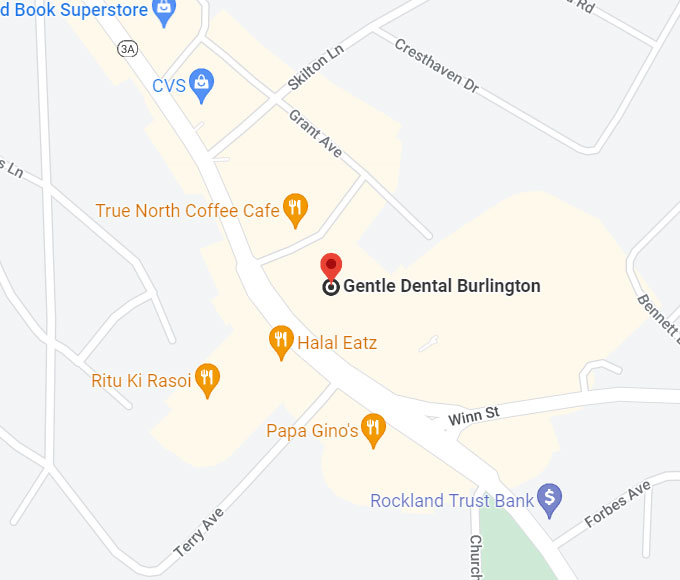
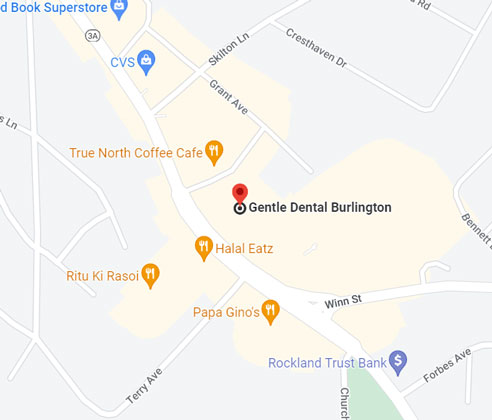
Parking spaces available in front of building. Parking lot on-premise.
Now welcoming patients from Gentle Dental Woburn.
Parking spaces available in front of building. Parking lot on-premise.
Now welcoming patients from Gentle Dental Woburn.
Burlington

I had two emergency visits in a week and they took me right away ! They are were all very friendly and kind ! I would highly recommend going to Burlington gentle dental!
Burlington
Very highly skilled practitioners attend to you at this office. They gave me a new perspective of my dental health, with lots of courtesy too. The customer service is excellent. I recommend them to anyone who seriously cares about good dental health.
Burlington
Extracted my broken tooth. Did the procedure during my initial visit with the practice . Very comfortable with the practice. They will become my go to practice moving forward.
Dentures may be considered when several teeth are missing, extensively damaged, or cannot be predictably restored with fillings, crowns, or other treatments.
Your dentist will first determine whether any remaining teeth can be preserved. When extraction is necessary, the timing of tooth removal and denture placement will be included in your personalized treatment plan.
Dentures may be suitable for patients who need to replace several or all missing teeth and want a removable tooth-replacement option.
During your consultation, the Burlington dental team will examine your jaws, gums, remaining teeth, and supporting bone. The number of missing teeth, condition of your mouth, bite relationship, bone structure, and personal preferences help determine the appropriate treatment.
The appropriate denture depends on how many teeth are missing, whether any natural teeth remain, and whether extractions are required.
Full dentures, also called complete dentures, replace all the teeth in the upper jaw, lower jaw, or both. The appliance rests on the gums and underlying ridge of the jaw.
A full denture includes a gum-colored base and a complete set of artificial teeth. It is designed to restore the appearance and function of an entire dental arch.
Partial dentures replace several missing teeth when healthy natural teeth remain. The appliance fills the open spaces and may use clasps or other components that attach to the remaining teeth for support.
In addition to restoring missing teeth, a partial denture may help prevent nearby teeth from gradually shifting into the open spaces.
Dentures can restore important functions affected by the loss of several or all teeth.
Full and partial dentures fill spaces created by tooth loss and help create a more complete smile.
Missing teeth can make it difficult to chew certain foods or maintain a balanced diet. Dentures restore contact between the upper and lower arches, helping patients chew more comfortably.
Teeth help form certain sounds and words. Replacing missing teeth can provide the oral structure needed for clearer and more natural speech.
Extensive tooth loss may reduce support for the cheeks and lips. Dentures can help restore facial contours and reduce the sunken appearance associated with missing teeth.
A partial denture fills open spaces between natural teeth. This may help reduce unwanted movement or tilting of the remaining teeth.
Traditional dentures can be removed for cleaning and while sleeping, making them a practical option for patients who prefer a removable appliance.
Replacing visible missing teeth may help patients feel more comfortable when smiling, speaking, eating, and participating in social activities.
Your consultation allows the Gentle Dental Burlington team to assess your oral health and discuss the most appropriate replacement options.
Your dentist examines your gums, jaws, remaining teeth, existing dental work, and areas of tooth loss. The team will also check for decay, gum disease, infection, sores, and other conditions that should be addressed before denture treatment.
Dental X-rays may be used to evaluate remaining tooth roots, the jawbone, impacted teeth, and other concerns that are not fully visible during a clinical examination.
Gentle Dental Burlington uses all-digital X-rays in its recently renovated office.
Your dentist will determine whether remaining teeth are healthy enough to preserve or use as support for a partial denture. Teeth with severe decay, infection, or advanced mobility may require treatment or extraction.
The Burlington team may discuss full dentures, partial dentures, immediate dentures, conventional dentures, or alternative treatments such as dental bridges and implants.
Your dentist will explain the recommended appliance, preparatory procedures, expected number of appointments, treatment timeline, estimated cost, maintenance requirements, and follow-up schedule.
Creating custom dentures generally requires several appointments over multiple weeks. The exact number of visits depends on the type of denture, whether extractions are needed, and how your mouth responds during the fitting process.
Before impressions are taken, your dentist may need to address tooth decay, gum disease, infection, damaged teeth, or other oral health concerns.
If teeth need to be removed, your treatment plan will specify whether an immediate denture will be placed or whether the gums should heal before the final appliance is made.
Highly accurate impressions are taken of your upper and lower jaws, gums, and any remaining teeth. Your dentist also records measurements that help establish the shape and relationship of your bite.
The impressions are used to create models of your mouth and guide the design of your custom denture.
Your dental team helps select artificial teeth that coordinate with your facial features, remaining teeth, preferences, and natural smile.
The size, shade, alignment, and position of the artificial teeth can be adjusted before the completed denture is created.
Several try-in visits may be required to review the appliance's shape, tooth position, bite, appearance, and overall fit.
These appointments allow the dentist and dental laboratory to make changes before completing the final denture. Gentle Dental notes that several try-ins may be needed to achieve an appropriate shape, color, and fit.
At the final placement appointment, your dentist positions the completed denture and evaluates its stability, bite, appearance, and comfort.
Areas that place excessive pressure on the gums can be adjusted. Several follow-up appointments may be needed as the tissues in your mouth adapt to the new appliance.
New dentures may feel unfamiliar at first. Your gums, tongue, cheeks, and facial muscles need time to adapt to the shape and movement of the appliance.
These effects commonly improve as your mouth adjusts. The process may take several weeks, and some patients require follow-up adjustments during the first few weeks.
Contact the Burlington office if the denture causes significant pain, creates persistent sores, or prevents you from eating or speaking comfortably.
Daily cleaning helps remove food, plaque, bacteria, and stains while protecting your gums and remaining natural teeth.
Rinse your dentures with water after meals to remove loose food particles. Handle them carefully to avoid bending clasps or damaging the base.
Use a denture brush and a product specifically designed for denture cleaning. Regular toothpaste may be too abrasive for some denture materials.
Brush your gums, tongue, cheeks, roof of the mouth, and any remaining natural teeth with a soft toothbrush. This helps remove plaque and support healthy oral tissues.
Unless your dentist provides different instructions, remove your dentures before sleeping to give your gums and oral tissues time to rest.
Dentures are generally left out for at least eight hours each day unless your dentist recommends otherwise.
Place removable dentures in water or an appropriate denture-cleaning solution overnight. Follow the manufacturer's instructions and your dentist's recommendations.
Do not allow most dentures to dry out because this may affect their shape.
Continue visiting the dentist even if you no longer have natural teeth. Dental visits allow the team to evaluate your gums, oral tissues, bite, jaw, and denture fit.
Regular examinations can also help identify oral infections, irritation, sores, and changes that may require adjustment.
Dentures are designed to be durable, but they do not last indefinitely. Dentures may last approximately seven to 10 years, although individual results vary based on the appliance, daily care, oral changes, and normal wear.
A denture may need to be adjusted, relined, repaired, or replaced because of:
Gentle Dental notes that dentures may require adjustment, repair, or replacement over time because of normal wear and changes in the mouth.
Dentures and bridges can both replace missing teeth, but they differ in design and use.
Dentures are removable appliances that may replace several teeth or an entire arch. They rest on the gums and may receive additional support from remaining teeth or other structures.
A traditional dental bridge is fixed in place and commonly replaces one or more consecutive missing teeth. It may be supported by crowns placed over neighboring teeth.
The appropriate option depends on the number and location of missing teeth, health of the supporting teeth, preferences, and budget.
Gentle Dental Burlington offers custom partial and full dentures designed for comfort and a complete smile. The practice has served the Burlington community for nearly 40 years and provides restorative care in a recently renovated office with all-digital X-rays.
Gentle Dental Burlington is located at 184 Cambridge Street, Burlington, MA 01803. The office offers extended weekday hours and alternating Saturday availability.
The cost of dentures varies according to:
Many dental insurance plans may provide partial coverage for dentures when they are considered necessary to restore oral function. Coverage depends on your deductible, waiting period, annual maximum, replacement frequency rules, and individual plan benefits.
Gentle Dental Burlington accepts most major insurance plans and offers financing options, including CareCredit and the Essential Dental Plan. The team can review your estimated treatment cost and available payment options before care begins.
Gentle Dental in Burlington, MA, offers a wide range of dental services, including general dentistry, cosmetic dentistry, orthodontics, and emergency dental care. Our experienced team is dedicated to providing comprehensive care for patients of all ages in a comfortable and welcoming environment. Explore our website for more information and to book an appointment with our skilled professionals.
Full dentures replace all teeth in the upper jaw, lower jaw, or both. Partial dentures replace several missing teeth while using the remaining natural teeth for additional support.
Immediate dentures can be prepared before extraction and placed soon after the teeth are removed. Because the gums change during healing, the appliance may require adjustments or replacement with a final denture.
The adjustment period varies. It may take several weeks or longer to become comfortable eating and speaking with new dentures. Follow-up adjustments can help improve the fit during this period.
Most patients should remove their dentures while sleeping to give the gums and oral tissues time to rest. Follow your dentist’s instructions based on your treatment and appliance.
Remove and rinse your dentures after eating, brush them daily with a denture brush and appropriate cleaner, and soak them overnight as directed. You should also clean your gums, tongue, cheeks, and remaining teeth every day.
Many regular toothpastes are abrasive and may scratch denture materials. Use a denture care product and cleaning method recommended by your dentist.
Dentures have an average lifespan of approximately seven to 10 years, although individual results vary. They may need repair, relining, adjustment, or replacement as the appliance and your mouth change.
Schedule an evaluation rather than attempting to adjust the appliance yourself. Your dentist can determine whether the denture needs an adjustment, reline, repair, replacement, or additional stabilization.
Many insurance plans may cover part of the cost of medically necessary dentures. Coverage varies based on deductibles, annual limits, replacement frequency rules, materials, and other plan terms.
Yes. Gentle Dental Burlington provides custom partial and full dentures and welcomes patients seeking restorative dental care. Contact the office to review current appointment availability.
If your request is a dental emergency, or you would like to call and schedule your dental appointment, contact information for our offices can be found here: Gentle Dental Locations. New patient offer not valid for emergency appointments.
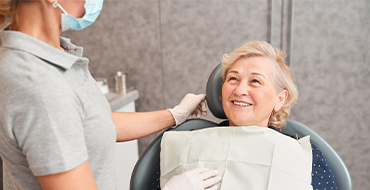
Partial or complete dentures can be a great option for replacing missing teeth a...

