New Patient Offer
$79
A $400+ Value
- Exam
- X-rays
- Cleaning
- Treatment Plan


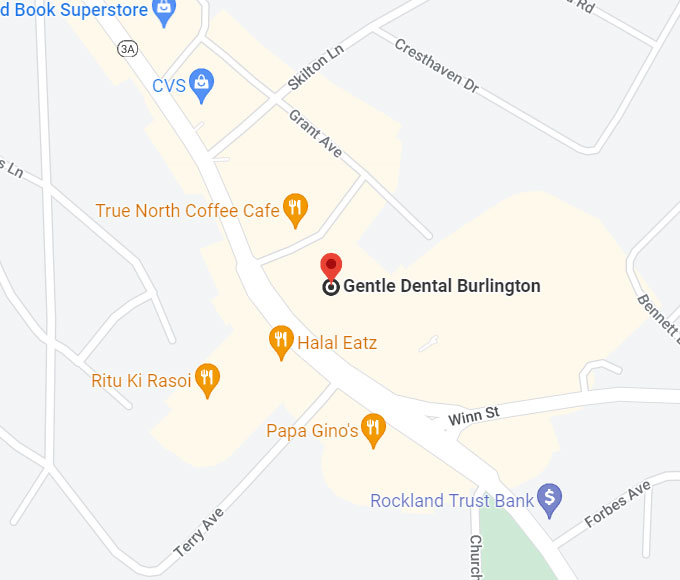
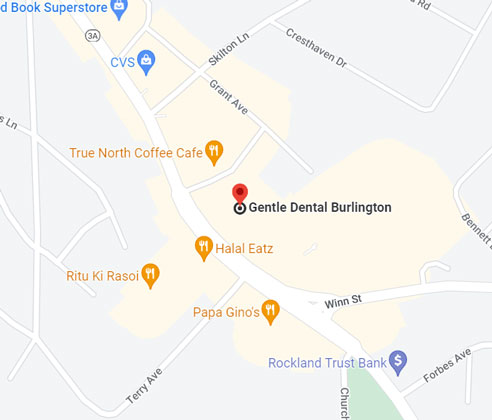
Parking spaces available in front of building. Parking lot on-premise.
Now welcoming patients from Gentle Dental Woburn.
Parking spaces available in front of building. Parking lot on-premise.
Now welcoming patients from Gentle Dental Woburn.
Burlington

I had two emergency visits in a week and they took me right away ! They are were all very friendly and kind ! I would highly recommend going to Burlington gentle dental!
Burlington
Very highly skilled practitioners attend to you at this office. They gave me a new perspective of my dental health, with lots of courtesy too. The customer service is excellent. I recommend them to anyone who seriously cares about good dental health.
Burlington
Extracted my broken tooth. Did the procedure during my initial visit with the practice . Very comfortable with the practice. They will become my go to practice moving forward.
Teeth whitening may help reduce discoloration associated with:
Your teeth whitening consultation allows the Burlington dental team to evaluate your smile and determine whether whitening is appropriate for you.
Your visit may include:
Teeth whitening is generally best suited for patients who have healthy teeth and gums and want to improve yellowing or staining of their natural teeth.
The Gentle Dental Burlington team can address active dental concerns before beginning cosmetic treatment and discuss alternatives when traditional whitening is not likely to provide the desired result.
Professional teeth whitening provides a customized approach to improving tooth discoloration while considering your oral health, existing dental work, sensitivity, and cosmetic goals. Compared with general store-bought products, dentist-supervised treatment offers greater control over the whitening process and allows your dental team to adjust treatment based on how your teeth respond.
Professional whitening begins with an evaluation of your current tooth shade, the type and depth of staining, your history of sensitivity, and any crowns, veneers, fillings, or bonding that may be visible when you smile.
Your dentist can recommend a whitening approach based on your desired results and treatment timeline. This individualized planning helps set realistic expectations and reduces the risk of using a product or whitening schedule that may not be appropriate for your teeth.
A dental evaluation helps identify cavities, gum inflammation, enamel wear, cracks, exposed roots, or other concerns that could affect whitening treatment. Addressing these issues first may help reduce discomfort and support safer treatment.
Dentist supervision also gives you a point of contact if you experience sensitivity, gum irritation, uneven results, or questions during the whitening process. Your treatment can be adjusted when needed rather than continuing with a standard, one-size-fits-all approach.
Professional application and custom-fitted trays can help distribute whitening gel more consistently across the visible surfaces of your teeth. This controlled placement may reduce uneven coverage caused by poorly fitting trays or strips that do not fully contact every tooth.
Your dentist can also account for differences in tooth shape, position, and staining patterns when planning treatment. Although whitening results vary, a customized approach can help create a more balanced and natural-looking improvement.
Whitening products can irritate the gums when they are applied incorrectly or used too frequently. Professional treatment includes instructions and precautions designed to limit unnecessary contact between the whitening gel and the surrounding soft tissues.
Your dental team may adjust the concentration, application time, or frequency of treatment based on your oral health. Following a dentist-recommended plan can also help reduce the risk of overuse and unnecessary tooth sensitivity.
Professional whitening offers greater control over the product strength, treatment duration, and application method. This allows your dentist to recommend an approach based on the type of discoloration present and how quickly you would like to see improvement.
While no whitening treatment can guarantee a specific final shade, dentist-supervised care can provide a clearer understanding of what results may be achievable. Your dentist can also identify stains that may not respond well to whitening and discuss other cosmetic options when appropriate.
Patients with sensitive teeth may still be able to receive professional whitening. Your dentist can evaluate the source and severity of the sensitivity before recommending treatment.
The whitening concentration, application time, and treatment schedule may be modified to improve comfort. Your dentist may also suggest sensitivity toothpaste, fluoride treatment, longer intervals between applications, or a temporary pause if discomfort develops.
Crowns, veneers, fillings, bridges, bonding, and implant restorations do not whiten in the same way as natural teeth. Professional treatment planning allows your dentist to consider the position and shade of these restorations before whitening begins.
This can help reduce noticeable color differences between natural teeth and existing dental work. When needed, your dentist can discuss whether additional cosmetic treatment may be appropriate after the desired whitening result is reached.
Professional whitening includes guidance before, during, and after treatment. Your dental team can explain how to use take-home products correctly, what level of sensitivity may be expected, and when to stop treatment and contact the office.
You can also receive recommendations for maintaining your results, including oral hygiene, routine cleanings, stain-causing foods and drinks, tobacco use, and dentist-recommended touch-up treatment.
Temporary tooth sensitivity is one of the most common effects of whitening. Some patients may notice brief discomfort when consuming hot, cold, sweet, or acidic foods and drinks during or shortly after treatment.
Contact the Burlington office if sensitivity is severe, continues after treatment, or is limited to a specific tooth. Persistent discomfort may be related to a cavity, crack, exposed root, or another dental concern rather than whitening alone.
Over-the-counter whitening toothpastes, strips, rinses, and trays are widely available. Some products may reduce surface staining, but results vary depending on the ingredients, concentration, fit, and consistency of use.
Patients considering an over-the-counter product should follow the manufacturer’s directions carefully and avoid using whitening products more frequently than recommended.
Teeth whitening is not permanent, but good oral hygiene and lifestyle choices can help maintain your results.
Brush twice a day with fluoride toothpaste and floss daily to reduce plaque and surface staining.
Professional cleanings help remove plaque, tartar, and certain surface stains that brushing cannot fully address.
Coffee, tea, red wine, dark soda, berries, tomato sauces, and other deeply pigmented items may gradually stain the teeth.
Rinsing your mouth with water after consuming stain-causing foods or beverages may help reduce the amount of pigment that remains on the teeth.
Smoking and other forms of tobacco use can quickly create yellow or brown discoloration.
The timing of touch-up treatment depends on your habits, tooth sensitivity, initial results, and whitening method. Use additional whitening products only as directed by your dentist.
Gentle Dental has served the Burlington community for nearly 40 years. Our recently renovated dental office combines modern clinical technology with a comfortable and accessible setting.
Our office is located at 184 Cambridge Street in Burlington, MA, making professional dental care convenient for patients in Burlington and surrounding communities.
The cost of professional teeth whitening depends on the treatment method, the number of appointments required, the severity of discoloration, and whether future touch-up treatment is recommended.
Because teeth whitening is generally considered an elective cosmetic procedure, many dental insurance plans do not cover it. The Gentle Dental Burlington team can explain the expected cost and available payment options before you begin treatment.
Gentle Dental in Burlington, MA, offers a wide range of dental services, including general dentistry, cosmetic dentistry, orthodontics, and emergency dental care. Our experienced team is dedicated to providing comprehensive care for patients of all ages in a comfortable and welcoming environment. Explore our website for more information and to book an appointment with our skilled professionals.
The amount of improvement varies based on your starting shade, the cause of discoloration, and the whitening method used. Many patients notice that their teeth become several shades brighter, but individual results cannot be guaranteed.
In-office whitening may provide noticeable improvement during a single appointment. Dentist-supervised take-home whitening is completed gradually over several days or weeks. Your dentist will recommend a schedule based on your teeth and treatment goals.
Whitening should not be painful, but temporary tooth sensitivity or gum irritation may occur. Tell your dentist if you already have sensitive teeth so the treatment can be adjusted when appropriate.
Whitening often improves yellow or surface staining caused by coffee, tea, red wine, tobacco, and other deeply colored substances. Results depend on the depth and type of stain.
No. Whitening agents brighten natural teeth but do not change the color of crowns, veneers, fillings, bonding, bridges, or implant restorations. Your dentist can help you plan treatment to reduce visible shade differences.
Active cavities and gum disease should generally be treated before whitening. Applying whitening products to unhealthy teeth or gums may increase sensitivity and irritation.
Professional whitening provides stronger customization and dental supervision. Store-bought strips may help with mild staining, but they are not designed around your individual tooth shade, sensitivity, restorations, or oral health.
Results vary based on oral hygiene, diet, tobacco use, and how frequently you consume staining foods and drinks. Routine cleanings and dentist-recommended touch-ups can help maintain your brighter smile.
The appropriate frequency depends on your whitening method, sensitivity, enamel condition, and treatment history. Avoid repeating treatment without guidance, as excessive whitening may irritate the teeth and gums.
If your request is a dental emergency, or you would like to call and schedule your dental appointment, contact information for our offices can be found here: Gentle Dental Locations. New patient offer not valid for emergency appointments.

It’s fair to say that we are all interested in having bright smiles. According t...
How long does professional teeth whitening last?If you’re looking to brighten yo...

Who doesn’t want a bright smile? Teeth whitening is a popular dental procedure, ...

