New Patient Offer
$79
A $400+ Value
- Exam
- X-rays
- Cleaning
- Treatment Plan


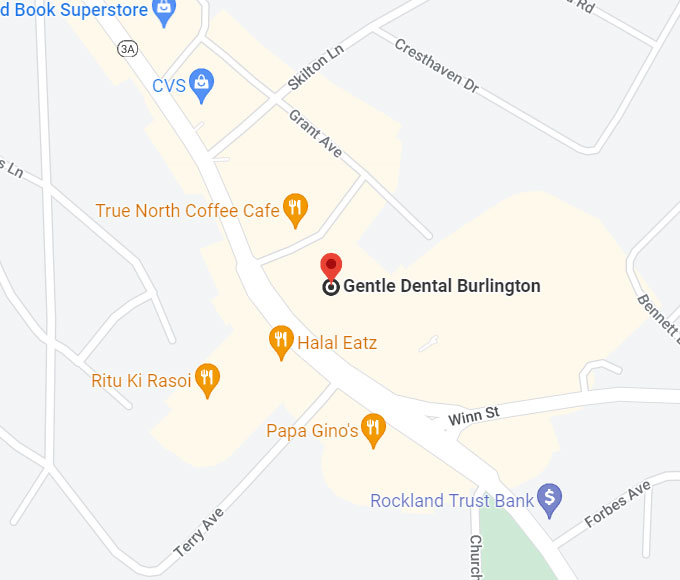
Parking spaces available in front of building. Parking lot on-premise.
Now welcoming patients from Gentle Dental Woburn.
Parking spaces available in front of building. Parking lot on-premise.
Now welcoming patients from Gentle Dental Woburn.
Burlington

I had two emergency visits in a week and they took me right away ! They are were all very friendly and kind ! I would highly recommend going to Burlington gentle dental!
Burlington
Very highly skilled practitioners attend to you at this office. They gave me a new perspective of my dental health, with lots of courtesy too. The customer service is excellent. I recommend them to anyone who seriously cares about good dental health.
Burlington
Extracted my broken tooth. Did the procedure during my initial visit with the practice . Very comfortable with the practice. They will become my go to practice moving forward.
Some cavities cause noticeable discomfort, while others are identified during a routine dental exam before symptoms appear.
Gentle Dental identifies tooth pain, biting discomfort, temperature sensitivity, visible holes, pits, and dark discoloration as possible signs that a filling may be needed. However, a dental examination and X-rays may be required to determine the extent of the decay and whether a filling is the appropriate treatment.
Dental fillings are generally used when a tooth has mild to moderate decay or limited structural damage and enough healthy enamel remains to support the restoration.
Gentle Dental notes that composite fillings may be appropriate for patients of all ages who have cavities, minor tooth damage, worn teeth, chips, cracks, or old metal fillings they would like to replace with a more natural-looking option.
A filling may not provide enough support when a large portion of the tooth is missing or weakened. Depending on the extent of the damage, your Burlington dentist may discuss an inlay, onlay, dental crown, root canal, or another restorative treatment. Fillings are commonly used for smaller areas of damage, while crowns may be considered when there is not enough healthy tooth structure to hold a filling reliably.
Composite fillings can restore oral health while providing a natural-looking result.
Composite resin can be selected to coordinate with the shade of the surrounding enamel. This makes tooth-colored fillings suitable for visible front teeth as well as many back teeth.
Composite fillings can be used to restore teeth affected by cavities, chips, cracks, fractures, gaps, and wear.
The composite material is attached to the prepared tooth using a dental adhesive. This bond helps support the remaining tooth structure and hold the restoration securely in place.
Composite filling treatment may require less removal of healthy tooth structure than some traditional metal restorations, depending on the size and location of the cavity.
By rebuilding the damaged portion of the tooth, a filling can restore a smoother biting surface and make chewing more comfortable.
Direct composite fillings can usually be completed during one dental visit. The material is placed directly into the prepared tooth, hardened, shaped, polished, and checked against your bite.
Your dental evaluation allows the Burlington team to determine whether you need a filling and how much tooth structure has been affected.
Your dentist examines the tooth and surrounding gums for visible decay, cracks, worn enamel, damaged dental work, and signs of infection.
Dental X-rays may be used to identify decay between teeth, beneath an existing filling, or in another area that cannot be fully evaluated visually. Gentle Dental Burlington features all-digital X-rays as part of its modern clinical technology.
Tell your dentist when the discomfort started, what triggers it, and whether the pain continues after the trigger is removed. These details can help distinguish a routine cavity from deeper decay or another dental condition.
Your dentist assesses whether enough healthy tooth structure remains to support a filling. Larger areas of decay may require a stronger restoration, such as an inlay, onlay, or crown.
The Burlington team will explain the recommended filling material, procedure, expected recovery, estimated cost, and any additional treatment that may be needed.
Gentle Dental uses tooth-colored composite resin to restore cavities and damaged teeth. The composite material is placed directly into the prepared area and bonded to the remaining tooth structure.
The filling procedure commonly includes the following steps:
Your dentist examines the affected tooth and may take a digital X-ray to evaluate the depth and location of the decay.
Local anesthesia is usually administered to numb the tooth and nearby gums. A very small filling may not always require anesthesia, depending on its location and depth.
The dentist removes the decayed or damaged tooth structure using specialized dental instruments. The area is then cleaned to remove debris and bacteria.
A dental adhesive is applied to the prepared area. The adhesive helps the composite resin bond securely to the remaining tooth structure.
The tooth-colored material is added in layers. Each layer is hardened with a special curing light before the next layer is applied.
Once the cavity is filled, the dentist shapes the composite to recreate the natural contour and chewing surface of the tooth. The restoration is polished to create a smooth finish.
Your dentist asks you to bite down to check how the treated tooth contacts the opposing teeth. The filling can be adjusted if it feels high or interferes with your normal bite.
Most patients can return to their normal routine after a filling appointment unless they receive sedation or are given different instructions by their dentist.
Your mouth may remain numb for a few hours following local anesthesia. Wait until normal sensation returns before chewing whenever possible, as this can help prevent accidentally biting your cheek, lip, or tongue.
Temporary sensitivity commonly improves within a few days, although mild symptoms may take a week or two to resolve. Contact Gentle Dental Burlington if the discomfort becomes severe, continues longer than expected, or worsens over time.
Fillings and crowns can both repair damaged teeth, but they cover different amounts of tooth structure.
A filling replaces a limited area of tooth structure affected by decay, a chip, or another minor defect. Most of the natural tooth remains uncovered.
A crown covers the entire visible portion of a prepared tooth. It may be recommended when the tooth has extensive decay, a large fracture, a failing large filling, or insufficient healthy structure to support another filling.
Your Burlington dentist will recommend the most conservative restoration that can predictably repair and protect the tooth.
A composite filling can remain functional for many years, but no dental restoration is permanent. Its lifespan depends on:
Large fillings on back teeth may experience greater wear because they are exposed to stronger chewing forces. Routine checkups allow your dentist to monitor the edges of the filling for cracks, wear, leakage, or new decay.
Protect your fillings and natural teeth by following a consistent oral care routine.
Use fluoride toothpaste and a soft-bristled toothbrush to remove plaque from your teeth and along the gumline.
Daily flossing removes food particles and plaque from between the teeth, including areas around the edges of a filling.
Frequent sugar exposure can contribute to new decay around the treated tooth. Sticky foods may also place additional stress on larger restorations.
Avoid chewing ice, pens, hard candy, or other objects that could crack, loosen, or dislodge a filling.
Grinding and clenching can place excessive pressure on your teeth and restorations. Your dentist may recommend a night guard if signs of grinding are present.
Professional cleanings and dental exams allow your dentist to monitor the filling and identify new decay, cracks, wear, or bite problems early.
Contact Gentle Dental Burlington if you experience:
Pain when biting may indicate that the filling is interfering with your bite and requires adjustment. Persistent throbbing pain or lingering temperature sensitivity may indicate that the decay affected the tissue inside the tooth and that additional treatment is needed.
Gentle Dental Burlington provides durable, tooth-colored fillings in a modern dental office designed for efficient and comfortable care. The location has served Burlington patients for nearly 40 years and features all-digital X-rays, a recently renovated setting, extended weekday hours, alternating Saturday appointments, and ample parking.
Gentle Dental Burlington is located at 184 Cambridge Street, Burlington, MA 01803.
The cost of a dental filling depends on several factors, including:
Many dental insurance plans provide coverage for at least part of the cost of medically necessary fillings, but deductibles, annual maximums, material limitations, and coverage percentages vary. Gentle Dental Burlington accepts most insurance plans and can help you understand your coverage and expected out-of-pocket cost before treatment.
Gentle Dental in Burlington, MA, offers a wide range of dental services, including general dentistry, cosmetic dentistry, orthodontics, and emergency dental care. Our experienced team is dedicated to providing comprehensive care for patients of all ages in a comfortable and welcoming environment. Explore our website for more information and to book an appointment with our skilled professionals.
You may need a filling if you have a cavity, chipped tooth, minor crack, sensitivity, pain when biting, or a visible hole in a tooth. Some cavities do not cause symptoms, so a dental examination and X-rays may be needed to identify them.
Yes. Gentle Dental Burlington lists durable, tooth-colored dental fillings among its restorative services. Composite resin can be matched to the shade of your natural teeth for a less noticeable result.
The treatment area is generally numbed with local anesthesia before the damaged tooth structure is removed. You should feel pressure or movement rather than pain. Tell your dentist if you experience discomfort during treatment.
Mild sensitivity to pressure, heat, or cold may occur for a few days after treatment. Some minor sensitivity can take a week or two to resolve. Contact your dentist if the pain is severe, worsens, or does not gradually improve.
The composite material is hardened during the procedure, but it is generally safer to wait until the numbness wears off before chewing. Follow your dentist’s instructions and avoid very hard foods during the initial recovery period.
A composite filling may repair a minor crack or chip. A deeper or more extensive crack may require a crown, root canal, or another treatment. Your dentist will evaluate the location and depth of the damage.
A large cavity may leave insufficient healthy tooth structure to support a filling. Your dentist may recommend an inlay, onlay, dental crown, root canal, or extraction depending on the extent of the damage.
Many dental insurance plans cover part of the cost of medically necessary fillings. The amount depends on your deductible, annual maximum, filling material, network benefits, and individual policy. Gentle Dental Burlington accepts most insurance plans and can help review your coverage.
If your request is a dental emergency, or you would like to call and schedule your dental appointment, contact information for our offices can be found here: Gentle Dental Locations. New patient offer not valid for emergency appointments.

Fillings are a crucial aspect of restorative dentistry, designed to repair minim...

Most people are familiar with a dental filling, as it is one of the most perform...
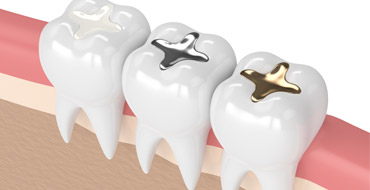
What is a dental filling?Were you just told by your dentist that you need a dent...

