New Patient Offer
$79
A $400+ Value
- Exam
- X-rays
- Cleaning
- Treatment Plan


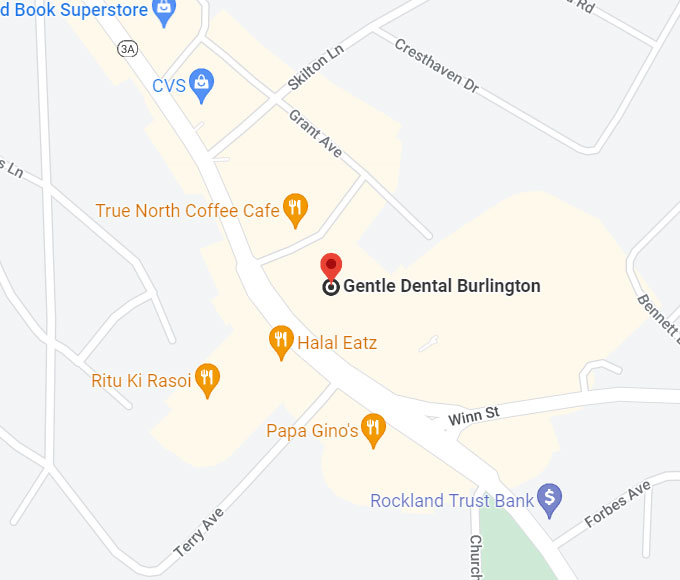
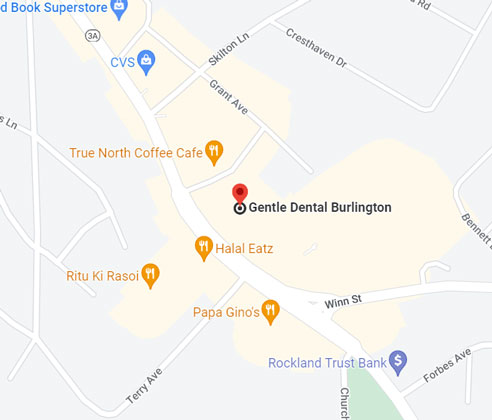
Parking spaces available in front of building. Parking lot on-premise.
Now welcoming patients from Gentle Dental Woburn.
Parking spaces available in front of building. Parking lot on-premise.
Now welcoming patients from Gentle Dental Woburn.
Burlington

I had two emergency visits in a week and they took me right away ! They are were all very friendly and kind ! I would highly recommend going to Burlington gentle dental!
Burlington
Very highly skilled practitioners attend to you at this office. They gave me a new perspective of my dental health, with lots of courtesy too. The customer service is excellent. I recommend them to anyone who seriously cares about good dental health.
Burlington
Extracted my broken tooth. Did the procedure during my initial visit with the practice . Very comfortable with the practice. They will become my go to practice moving forward.
Not every wisdom tooth requires extraction. Your dentist may recommend removal when keeping the tooth could affect your comfort, oral hygiene, or surrounding dental structures.
An impacted wisdom tooth is trapped fully or partially beneath the gum tissue or jawbone. It may grow at an angle toward another tooth, toward the back of the mouth, or remain positioned horizontally.
Impacted teeth may cause pressure, swelling, recurring discomfort, infection, or damage to nearby teeth. Surgical removal may be required when the tooth cannot be accessed through a routine extraction.
Pain near the back of the jaw may develop when a wisdom tooth is erupting incorrectly, pressing against another tooth, or affecting the surrounding gum tissue.
Persistent tenderness, jaw discomfort, or swelling should be evaluated to determine whether the wisdom tooth is the source of the problem.
A partially erupted wisdom tooth may create a flap of gum tissue where food particles and bacteria can collect. This can lead to recurring inflammation or infection around the tooth.
Removing the wisdom tooth may be recommended when the area repeatedly becomes swollen, painful, or difficult to keep clean.
Wisdom teeth sit far back in the mouth and can be difficult to brush and floss thoroughly. Decay may develop in the wisdom tooth or in the neighboring molar when the space between them cannot be cleaned effectively.
Extraction may be considered when the tooth cannot be predictably restored or continues to place the adjacent tooth at risk.
Plaque and bacteria around a difficult-to-clean wisdom tooth may contribute to gum inflammation or periodontal concerns.
Your dentist will evaluate the gum tissue around the wisdom tooth and determine whether removal may help protect the surrounding area.
An angled or impacted wisdom tooth may press against the second molar. This can contribute to decay, root damage, gum problems, or loss of supporting bone around the neighboring tooth.
Removing the wisdom tooth may help protect the health and stability of the adjacent molar.
In some cases, a fluid-filled cyst can develop around an unerupted wisdom tooth. A cyst may affect the surrounding bone, tooth roots, or nearby structures.
Dental imaging helps your dentist identify these changes and determine whether surgical treatment is necessary.
A dentist or orthodontist may evaluate wisdom teeth as part of an overall orthodontic treatment plan. Removal may be recommended when tooth position, limited space, or another clinical concern could interfere with long-term oral health.
Schedule an evaluation at Gentle Dental Burlington if you experience:
Severe pain, facial swelling, fever, drainage, or difficulty swallowing should be evaluated promptly because these symptoms may indicate an active infection.
No. Some wisdom teeth grow into a healthy position, remain free from disease, and can be cleaned effectively. In these cases, your dentist may recommend continued monitoring rather than removal.
Wisdom teeth that remain in place should be evaluated during routine dental visits. Dental X-rays may be used periodically to monitor their position, root development, and effect on nearby teeth.
Your Burlington dentist will consider whether the wisdom teeth:
Your consultation allows the Burlington dental team to determine whether removal is necessary and which extraction approach may be appropriate.
Your dentist examines the wisdom teeth, surrounding gum tissue, neighboring molars, jaw, and bite. The team will look for swelling, infection, decay, gum inflammation, and other visible concerns.
Dental X-rays help show:
Gentle Dental Burlington provides digital dental imaging as part of its modern clinical care.
Tell your dentist or oral surgeon about:
Gentle Dental advises patients to discuss their medical history and current medications during the wisdom teeth consultation.
Your dentist will determine whether the tooth can be removed with a simple extraction or requires surgical removal.
The recommendation depends largely on whether the tooth has fully erupted and how it is positioned beneath the gums or jawbone.
Before treatment, the Burlington team will explain:
A simple extraction may be appropriate when the wisdom tooth has fully erupted through the gum and can be accessed easily.
After the area is numbed with local anesthesia, the dentist carefully loosens and removes the tooth. Gentle Dental states that simple extractions are performed under local anesthesia.
Surgical removal may be necessary when a wisdom tooth is:
During surgical extraction, the dentist or oral surgeon may create a small opening in the gum tissue. A limited amount of bone may be removed, and the tooth may be divided into smaller sections to allow controlled removal.
The exact procedure depends on the number, position, and complexity of the teeth being removed.
Local anesthesia is used to numb the treatment area. Depending on the complexity of the procedure and your needs, intravenous sedation or nitrous oxide may also be discussed.
Gentle Dental states that local anesthesia, intravenous sedation, or nitrous oxide may be used during surgical wisdom tooth removal.
When the tooth is impacted, the clinician may create a small incision in the gum tissue to expose the tooth.
If bone is covering part of the tooth, a small amount may be removed to provide safe access.
A fully erupted tooth may be loosened and removed as one piece. An impacted tooth may be divided into sections so it can be removed through a smaller opening.
After removal, the socket is carefully cleaned. Any loose tissue or debris may be removed.
Stitches may be used to reposition the gum tissue and support healing after a surgical extraction. Not every patient requires stitches.
Gauze is placed over the socket to help control bleeding and support the formation of a protective blood clot. Wisdom teeth removal is generally completed as an outpatient procedure, allowing patients to return home the same day.
Removing a painful or poorly positioned wisdom tooth can address pressure and discomfort at the back of the mouth.
Extraction can remove areas where bacteria and food repeatedly collect beneath partially erupted gum tissue.
Removing an angled or impacted wisdom tooth may reduce the risk of damage, decay, or gum problems affecting the neighboring molar.
Wisdom teeth that are difficult to reach can make effective brushing and flossing challenging. Removal may make it easier to clean the back of the mouth.
Surgical treatment removes teeth that are trapped beneath the gum or bone and cannot erupt normally.
When clinically appropriate, removal may help prevent future concerns such as recurring infection, decay, gum disease, or damage to surrounding structures.
Your Gentle Dental Burlington team will provide instructions based on your procedure and anesthesia plan.
Preparation may include:
Do not eat or drink before your appointment unless instructed to fast. Preparation requirements vary based on the anesthesia method, so follow the instructions provided by your care team.
Blood clots form inside the extraction sites and protect the underlying bone and nerves during early healing.
Avoid activities that could dislodge the clots, including:
Dislodging a blood clot can increase the risk of dry socket.
Bite gently on the gauze provided by your dental team. Replace it according to your aftercare instructions if light bleeding continues.
Contact the Burlington office if bleeding remains heavy or does not gradually improve.
An ice pack may be placed against the outside of the face for short intervals during the first day or two.
Follow the instructions provided by your dentist regarding ice, medications, and swelling management.
Plan to rest after the procedure. Avoid strenuous exercise, bending, and heavy lifting during the initial healing period.
Your dentist will advise when you can safely return to work, school, exercise, and other daily activities.
Continue brushing and flossing the areas away from the extraction sites. Avoid brushing directly over the sockets until your dentist says it is safe.
Gentle rinsing with salt water or a prescribed mouth rinse may be recommended after the initial healing period. Do not rinse forcefully.
Use prescribed or recommended medication exactly as instructed. Contact the office if medication causes a reaction or does not provide adequate relief.
Choose soft foods that require minimal chewing during the initial recovery period.
Allow hot foods and drinks to cool before consuming them. Chew away from the extraction sites when possible and gradually introduce firmer foods as healing progresses.
Soft foods, rest, ice packs, careful brushing, and avoiding smoking or straws are commonly recommended during early recovery.
Recovery varies based on the number of teeth removed, whether they were impacted, the complexity of surgery, and your individual healing response.
Many patients begin returning to normal daily activities within a few days. Initial healing commonly occurs within about one to two weeks, while the extraction sites continue healing beneath the gums for longer.
Follow-up care may be recommended to evaluate healing, remove non-dissolving stitches, or address any concerns.
Contact the office if you experience:
Prompt evaluation can help identify infection, dry socket, medication reactions, or other complications.
Gentle Dental Burlington offers oral surgery services in a modern setting with digital dental imaging, flexible scheduling, and personalized treatment planning. The Burlington oral surgery team provides routine tooth extractions, wisdom tooth removal, dental implants, bone grafting, and other surgical services.
Gentle Dental Burlington is located at 184 Cambridge Street, Burlington, MA 01803. The office provides weekday appointments, evening availability, and appointments on alternating Saturdays.
The cost of wisdom teeth removal depends on:
Gentle Dental states that many dental insurance plans may cover part or all of wisdom tooth removal, although coverage varies by plan. The Burlington office accepts most major insurance plans and offers financing options such as CareCredit and the Essential Dental Plan.
The Burlington team can provide a personalized estimate after examining your wisdom teeth and determining the complexity of treatment.
Gentle Dental in Burlington, MA, offers a wide range of dental services, including general dentistry, cosmetic dentistry, orthodontics, and emergency dental care. Our experienced team is dedicated to providing comprehensive care for patients of all ages in a comfortable and welcoming environment. Explore our website for more information and to book an appointment with our skilled professionals.
Removal may be recommended if your wisdom teeth are impacted, painful, infected, decayed, difficult to clean, or damaging nearby teeth. Your dentist will examine your mouth and review X-rays before making a recommendation.
No. Healthy wisdom teeth that have erupted normally, can be cleaned effectively, and are not causing problems, may be monitored instead of removed.
An impacted wisdom tooth is unable to emerge normally because it is trapped beneath the gum tissue, jawbone, or another tooth. It may be fully or partially impacted.
The treatment area is numbed with local anesthesia. Sedation may also be discussed depending on the complexity of the procedure and your needs. You may feel pressure or movement, but you should not feel sharp pain during treatment.
Cleveland Clinic notes that the procedure commonly takes about an hour, although the timing varies according to the number of teeth and the extraction complexity.
Many patients resume basic activities within a few days. Initial recovery generally takes about one to two weeks, although the sockets continue healing for longer.
The timing depends on the number and complexity of the extractions and the type of work or school activities involved. Many patients plan several days for rest before gradually returning to their routine.
Choose soft foods such as yogurt, applesauce, mashed potatoes, eggs, pudding, and soft pasta. Avoid hard, crunchy, sticky, or very hot foods during early healing.
Many plans may cover part or all of medically necessary wisdom tooth extraction. Coverage depends on the number of teeth, type of extraction, anesthesia, deductible, annual maximum, and individual plan terms.
If your request is a dental emergency, or you would like to call and schedule your dental appointment, contact information for our offices can be found here: Gentle Dental Locations. New patient offer not valid for emergency appointments.

What is a wisdom tooth?Although wisdom teeth have nothing to do with wisdom, it ...

You probably know someone who has had a tooth extraction, as it is a common dent...

How much to pull a tooth? Tooth extraction costs can vary based on the type of t...

