New Patient Offer
$79
A $400+ Value
- Exam
- X-rays
- Cleaning
- Treatment Plan


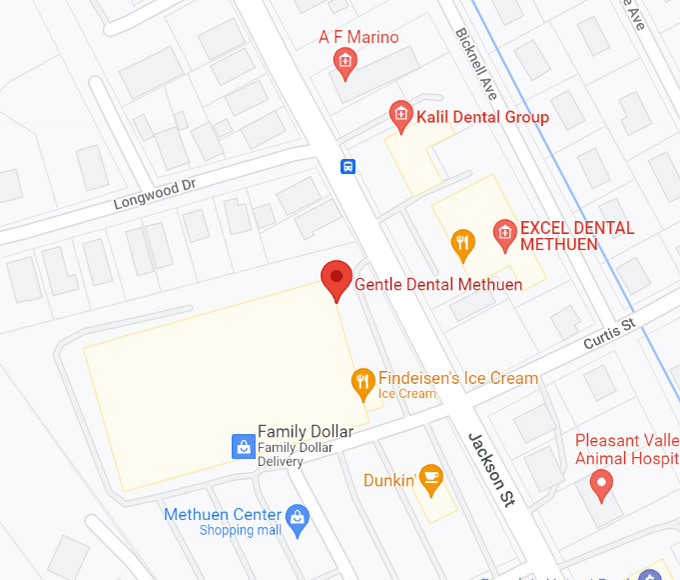
Parking lot located in front of building.
Parking lot located in front of building.
Methuen

Everyone in this office is extremely polite. They seem to always be running on time. The hygienist Jen is awesome! She does a great job !
Methuen
It was a very pleasant experience. The staff and dentist were very friendly. The dentist was in complete command of her clinical work.
Methuen
I’ve been with this practice since 2007 and have all good things to say about them, Dr. Prakash and her assistant, Myrna. They are both very knowledgeable and have treated me honestly and compassionately. The office staff is very helpful. I actually love going there!
Your dentist may recommend a dental crown when a tooth needs more protection or structural support than a filling alone can provide.
Dental crowns may be used to:
The appropriate treatment depends on the condition of the tooth, the amount of remaining tooth structure, and your overall oral health.
A tooth does not always need a crown simply because it is painful or damaged. A dental examination is necessary to determine the cause of the problem and the right treatment.
You may need an evaluation for a dental crown if you have:
Your Methuen dentist can evaluate the tooth and determine whether a filling, crown, root canal, extraction, or another treatment is appropriate.
A damaged tooth can become more vulnerable when a large portion of its natural structure has been lost.
A crown covers the visible part of the tooth and helps distribute biting forces across the restoration. This can provide additional support to a tooth that has been weakened by decay, fractures, previous dental work, or root canal treatment.
The goal is to preserve as much healthy tooth structure as possible while restoring the tooth's ability to function comfortably.
Dental crown treatment typically involves preparing the affected tooth, creating a restoration that fits the tooth, and securely placing the final crown.
Your dentist examines the tooth and surrounding gums. Dental X-rays may be used to evaluate the roots, supporting bone, and extent of damage or decay.
The treatment area is numbed, and damaged or decayed tooth structure is removed. The tooth is then shaped so the crown can fit securely over it.
If a significant portion of the tooth is missing, additional restorative material may be needed to build up the tooth before crown placement.
An impression or digital scan is used to capture the shape of the prepared tooth and surrounding teeth. This information helps create a crown that fits your bite.
If your final crown is being created by a dental laboratory, a temporary crown may be placed to protect the prepared tooth between appointments.
When the permanent crown is ready, your dentist checks its shape, color, fit, and bite. The crown is then bonded or cemented securely over the prepared tooth.
A temporary crown protects your prepared tooth while your permanent restoration is being made.
Because temporary crowns are designed for short-term use, they may not be as strong as the final restoration.
While wearing a temporary crown, your dentist may recommend that you:
Your dentist will provide specific instructions based on your treatment.
A tooth that has undergone root canal treatment may require a crown, particularly when the tooth has lost a significant amount of natural structure.
Root canal treatment removes infected or damaged tissue from inside the tooth, but the remaining tooth may need additional structural support.
A dental crown can cover and protect the treated tooth while restoring its shape and chewing function.
Whether a crown is needed depends on factors such as the tooth's location, the amount of remaining tooth structure, and the type of restoration already present.
Dental crowns are designed to be durable, but they do not last forever.
Their lifespan can vary based on:
Good brushing, flossing, routine dental exams, and avoiding habits such as chewing ice or hard objects can help protect your restoration.
Your dentist will also check your crown during routine dental visits.
A crowned tooth still requires daily care because the natural tooth underneath the restoration can remain vulnerable to decay, particularly around the crown margin.
To help maintain your crown:
Maintaining healthy gums around the crowned tooth is also important for the long-term success of the restoration.
A dental crown should feel stable once it has been permanently placed.
Contact your dentist if you notice:
Avoid attempting to permanently reattach a loose crown yourself. Your dentist should examine the tooth to determine why the restoration has loosened and whether it can be recemented or needs replacement.
Gentle Dental in Methuen provides restorative dental care for patients who need to repair and protect damaged teeth.
Our dental team can evaluate damaged, decayed, cracked, or weakened teeth and determine whether a dental crown is the appropriate restorative treatment.
Patients can access preventive, restorative, cosmetic, emergency, orthodontic, and specialty dental care through the Methuen office, helping coordinate treatment when more than one procedure is needed.
Every damaged tooth is different. Your dentist will consider the condition of your tooth, bite, dental history, and treatment goals before recommending a crown.
Routine examinations allow your dentist to monitor both the crown and the natural tooth underneath it for changes that may require attention.
Providing a comprehensive range of dental services in Methuen, our clinic focuses on efficient and professional care. We offer everything from preventive cleanings and digital x-rays to cosmetic treatments like custom veneers and teeth whitening.
A filling may be appropriate when enough healthy tooth structure remains to support the restoration. A crown may be recommended when a tooth has extensive decay, a large filling, significant structural damage, or another condition that requires additional protection.
A crown may be used to protect and restore certain cracked teeth. Whether a crown is appropriate depends on the location and severity of the crack and whether the tooth can be predictably restored.
Some teeth require a crown after root canal treatment, particularly back teeth or teeth that have lost significant structure. Your dentist will evaluate the treated tooth and recommend the appropriate final restoration.
The treatment area is typically numbed before the tooth is prepared. You may experience temporary sensitivity or mild discomfort afterward, but your dentist will provide guidance based on your treatment.
Treatment time depends on the type of crown and how it is made. Some crowns require more than one appointment, including tooth preparation, temporary crown placement, and final crown placement.
Once your permanent crown has been placed and your dentist confirms it is secure, you can generally return to normal eating. Avoid using the crowned tooth to bite extremely hard objects that could damage the restoration.
A crown can sometimes loosen or come off because of wear, changes in the underlying tooth, decay, or problems with the bonding material. Contact Gentle Dental in Methuen if your crown feels loose or comes off.
If your request is a dental emergency, or you would like to call and schedule your dental appointment, contact information for our offices can be found here: Gentle Dental Locations. New patient offer not valid for emergency appointments.
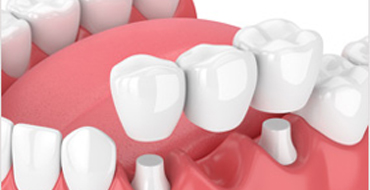
What is the difference between a crown and a bridge?There are a lot of different...

