New Patient Offer
$79
A $400+ Value
- Exam
- X-rays
- Cleaning
- Treatment Plan


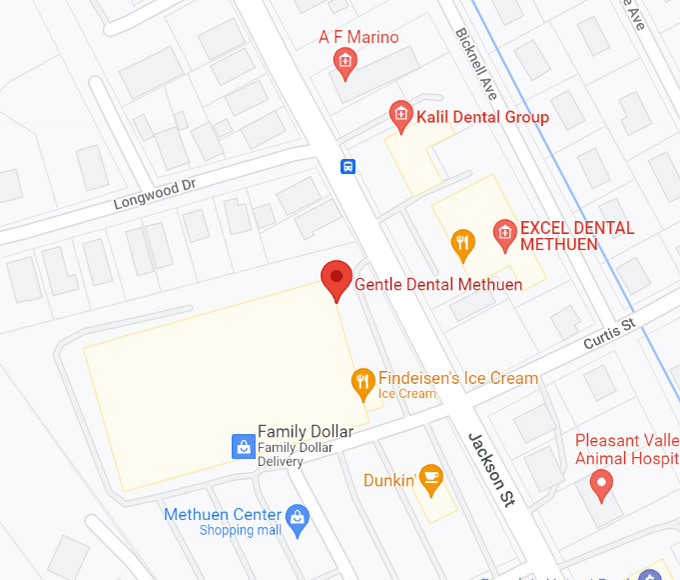
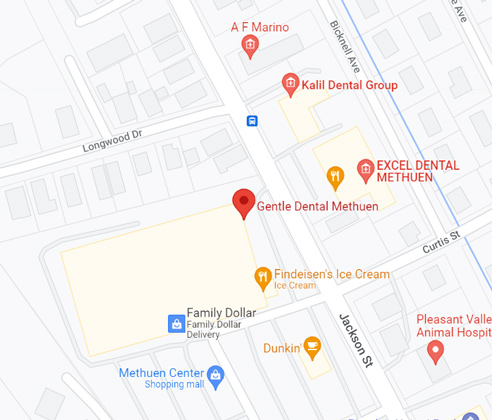
Parking lot located in front of building.
Parking lot located in front of building.
Methuen

Everyone in this office is extremely polite. They seem to always be running on time. The hygienist Jen is awesome! She does a great job !
Methuen
It was a very pleasant experience. The staff and dentist were very friendly. The dentist was in complete command of her clinical work.
Methuen
I’ve been with this practice since 2007 and have all good things to say about them, Dr. Prakash and her assistant, Myrna. They are both very knowledgeable and have treated me honestly and compassionately. The office staff is very helpful. I actually love going there!
Dentures may be considered when several or all teeth are missing or when remaining teeth have a poor long-term prognosis.
You may benefit from a denture evaluation if you:
Your dentist will evaluate your mouth before determining whether dentures, dental implants, bridges, or another restoration is appropriate.
Different types of dentures are available depending on how many teeth are missing and the condition of the remaining teeth.
Full dentures, also called complete dentures, replace all teeth in the upper arch, lower arch, or both.
They are typically recommended when no healthy natural teeth remain in the affected arch or when the remaining teeth cannot be predictably restored.
A full denture rests on the gums and is custom-designed to match your mouth.
Partial dentures replace several missing teeth while preserving healthy natural teeth.
A removable partial denture usually includes replacement teeth attached to a base and may use clasps or other components to help secure the appliance around existing teeth.
Partial dentures can also help reduce the movement of neighboring teeth into spaces created by tooth loss.
Dentures are customized to your mouth, so treatment usually involves several stages.
Your dentist evaluates your gums, remaining teeth, bite, jaw structure, and overall oral health.
Dental X-rays or other diagnostic information may be used when necessary to identify teeth that need treatment before denture fabrication.
Your dentist will discuss whether you need full dentures, partial dentures, or another tooth replacement option.
If damaged teeth need to be removed before receiving dentures, those procedures will be incorporated into your treatment plan.
Measurements and impressions of your mouth are used to help create a denture that fits your gums, bite, and facial structure.
The size, shape, shade, and arrangement of replacement teeth are selected to create a natural-looking restoration.
Once your denture is ready, your dentist checks the fit, bite, appearance, and comfort.
Adjustments may be made to reduce pressure points and improve how the denture functions.
It can take time for your mouth to adapt to a new denture. Follow-up visits allow your dentist to make adjustments if you experience sore areas, looseness, or changes in your bite.
New dentures can feel unfamiliar at first.
During the adjustment period, you may notice:
These issues often improve as your mouth and facial muscles adapt.
Your dentist may recommend starting with softer foods, chewing slowly, and practicing speaking aloud to become more comfortable with the new appliance.
If soreness persists or your denture feels unstable, schedule an adjustment rather than trying to modify the denture yourself.
Dentures require daily cleaning to remove food particles, plaque, and bacteria.
Your dental team may recommend that you:
Regular cleaning helps maintain the appliance and supports healthy gums and oral tissues.
Dentures can last for several years, but they are not permanent.
Over time, your gums and jawbone may change shape. Normal denture wear can also affect the fit, bite, and appearance of the appliance.
Signs that your denture may need adjustment, relining, repair, or replacement include:
Routine dental visits allow your dentist to monitor both your dentures and the tissues supporting them.
Even if you no longer have natural teeth, routine oral care remains important.
Clean your gums, tongue, and other oral tissues every day to remove plaque and stimulate circulation.
Routine dental visits also allow your dentist to evaluate:
Patients with partial dentures should continue brushing and flossing their remaining natural teeth carefully.
Gentle Dental in Methuen provides restorative dental care for patients who need to replace missing teeth and restore oral function.
Our Methuen dental team can evaluate whether a full or partial denture is appropriate based on the number and condition of your remaining teeth.
Dentures are the only option for replacing missing teeth. Your dentist can discuss other restorative options when appropriate and help you compare treatments based on your individual needs.
If you need extractions, preventive treatment, restorative procedures, or ongoing denture maintenance, these services can be coordinated as part of your overall dental care.
Your dental care does not end when your denture is placed. Follow-up visits help monitor the fit of your appliance and allow adjustments to be made as your mouth changes.
Providing a comprehensive range of dental services in Methuen, our clinic focuses on efficient and professional care. We offer everything from preventive cleanings and digital x-rays to cosmetic treatments like custom veneers and teeth whitening.
Full dentures replace all teeth in an upper or lower arch, while partial dentures replace several missing teeth and work around healthy natural teeth that remain.
Yes. If your remaining natural teeth are healthy enough to preserve, a partial denture may be used to replace the missing teeth. Your dentist will evaluate each tooth before recommending treatment.
Not always. Teeth are removed only when they cannot be predictably maintained or when removal is necessary for your treatment plan. Healthy teeth may often be retained and incorporated into a partial denture plan.
Adjustment time varies. Many patients need several weeks to become comfortable eating, speaking, and functioning with new dentures. Follow-up adjustments can improve comfort as your mouth adapts.
Most patients can return to a varied diet after becoming comfortable with their dentures. Start with soft foods and gradually introduce firmer foods as your chewing skills improve.
Yes. Dentures may eventually need replacement because the appliance wears down and your gums and jawbone change over time. Your dentist can monitor the fit during routine visits.
Yes. Depending on the condition of the denture and how your mouth has changed, your dentist may recommend an adjustment, reline, repair, or replacement.
Many removable denture wearers are advised to take their dentures out while sleeping so the gums can rest. Follow the specific instructions provided by your dentist.
If your request is a dental emergency, or you would like to call and schedule your dental appointment, contact information for our offices can be found here: Gentle Dental Locations. New patient offer not valid for emergency appointments.
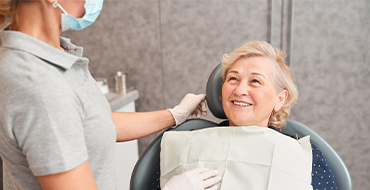
Partial or complete dentures can be a great option for replacing missing teeth a...

