New Patient Offer
$79
A $400+ Value
- Exam
- X-rays
- Cleaning
- Treatment Plan


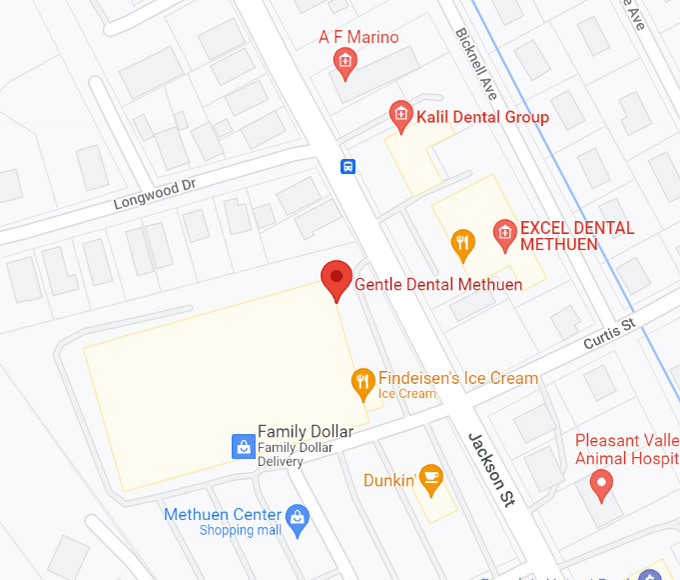
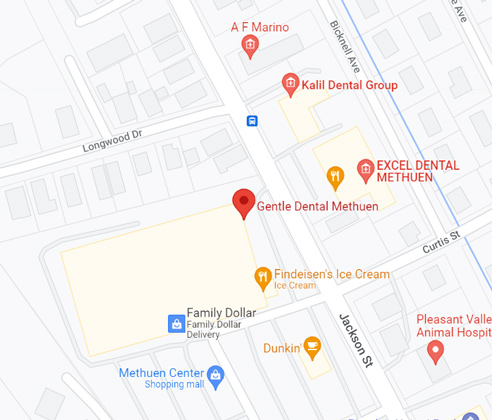
Parking lot located in front of building.
Parking lot located in front of building.
Methuen

Had an extremely difficult molar extraction that Dr Richard handled like a champion. Could've been so much worse. The staff was terrific. Polite, professional, courteous and understanding. I will absolutely go back!
Methuen
This dental office has an exceptional team. The office manager Luz goes above and beyond to keep everything running smoothly and communicates with professionalism and care. The front desk staff is super friendly, attentive, and always willing to help. Their teamwork, organization, and patient‑first attitude truly set them apart.
Methuen
Wonderful, nonjudgmental and sensitive to the needs of the patient. Staff are wonderful from the receptionist to the dentist. I saw orthodontist today, the entire team are wonderful. They love their job and very good at what they do. You all are awesome. Gentle Dental Methuen is the right place to go for your dental needs. I am glad I found you guys.
Dental symptoms do not automatically mean that a tooth needs to be removed. However, persistent or worsening symptoms should be examined by a dentist.
Schedule a dental evaluation if you experience:
Your Methuen dentist can identify the cause of your symptoms and determine whether the tooth can be restored or whether tooth removal should be considered.
The approach used for tooth removal depends on the condition, position, and accessibility of the affected tooth.
A simple extraction may be appropriate when the tooth is visible above the gumline and can be safely accessed with dental instruments.
After the area is numbed, the dentist loosens the tooth and carefully removes it from the socket.
A surgical approach may be necessary when a tooth is impacted, badly broken, difficult to access, or located below the gumline.
The dentist or dental specialist may need to make a small opening in the gum tissue or divide the tooth into sections to allow it to be removed safely. More complex extractions may require additional surgical steps.
Your procedure is planned based on your dental examination, imaging, medical history, and the condition of the tooth.
Your dentist examines the tooth, gums, surrounding teeth, and supporting bone. Dental X-rays may be used to evaluate the tooth roots and surrounding structures.
It is important to tell your dental team about medications, supplements, medical conditions, and previous procedures before treatment.
Local anesthesia is typically used to numb the tooth and surrounding gum tissue before removal. Depending on the procedure and your individual needs, additional comfort or sedation options may be discussed.
The dentist carefully loosens and removes the tooth using dental instruments. If the tooth is difficult to access, additional surgical steps may be required.
After the tooth is removed, the socket is cleaned. Depending on your situation, stitches or other treatment may be needed.
A blood clot forms inside the socket after the procedure and plays an important role in protecting the area during early healing. Your dental team will give you specific instructions to help protect the extraction site.
Following your dentist's instructions after an extraction can support healing and reduce the risk of complications.
Your dental team may recommend that you:
Strenuous activity, smoking, forceful rinsing, and drinking through a straw can interfere with the healing of the extraction site or disturb the protective blood clot.
Your dental team will explain which symptoms are expected during recovery and which require additional care.
Contact your dentist if you develop symptoms such as:
Cleveland Clinic advises contacting a dental provider after an extraction for symptoms including fever, drainage from the surgical site, or severe pain that does not improve with medication.
Not every extracted tooth needs to be replaced. Wisdom teeth, for example, are generally treated differently from teeth that are important for chewing or maintaining tooth alignment.
When replacement is appropriate, your dentist may discuss options such as:
A dental implant can replace the missing tooth root and support a dental restoration.
A dental bridge can replace a missing tooth by using neighboring teeth or other support to hold the restoration in place.
A removable partial denture may be considered when one or more teeth are missing.
Your Methuen dentist can discuss whether replacement is recommended and which option may best fit your dental health and treatment goals.
Gentle Dental in Methuen provides preventive, restorative, specialty, emergency, and oral surgery services in one dental office. The Methuen location specifically lists extractions, tooth removal, and bone grafting among its oral surgery services.
Patients who need a tooth extraction can receive an evaluation at the Methuen office and discuss the appropriate treatment approach based on the condition of the tooth.
The Methuen office uses digital X-rays and diagnostic technology to support dental evaluation and treatment planning.
Gentle Dental in Methuen offers preventive, restorative, emergency, orthodontic, and specialty dental services in addition to oral surgery. This can make it easier to coordinate care when another treatment is needed before or after an extraction.
Gentle Dental in Methuen accepts most dental insurance plans, and the office team can help patients understand available coverage.
Providing a comprehensive range of dental services in Methuen, our clinic focuses on efficient and professional care. We offer everything from preventive cleanings and digital x-rays to cosmetic treatments like custom veneers and teeth whitening.
A severely decayed tooth may need to be removed, but extraction is not automatically the first treatment. Your Methuen dentist will evaluate how much healthy tooth structure remains and whether a filling, crown, root canal, or another treatment could preserve the tooth.
Local anesthesia is typically used to numb the tooth and surrounding tissues during an extraction. Your dental team can also discuss available comfort options based on the complexity of your procedure and your individual needs.
Initial recovery often takes several days, but healing time varies depending on the tooth, the complexity of the extraction, and your overall health. The socket and surrounding bone continue healing after you begin feeling better.
Soft foods are generally recommended during the early stages of healing. Your dentist will tell you when you can gradually return to your normal diet.
You should continue keeping your mouth clean, but the extraction site needs special care. Follow your dentist's instructions about when and how to brush, floss, and rinse near the area.
It depends on which tooth was removed and your individual dental needs. If replacement is recommended, your dentist may discuss options such as a dental implant, bridge, or partial denture.
Yes. Gentle Dental in Methuen offers emergency dental care in addition to oral surgery services. A dentist can evaluate sudden or severe tooth pain and determine whether extraction or another treatment is appropriate.
If your request is a dental emergency, or you would like to call and schedule your dental appointment, contact information for our offices can be found here: Gentle Dental Locations. New patient offer not valid for emergency appointments.

The goal after a tooth extraction is to protect the blood clot, reduce swelling,...

Some people describe going to the dentist as pulling teeth! But this is far from...

