New Patient Offer
$79
A $400+ Value
- Exam
- X-rays
- Cleaning
- Treatment Plan


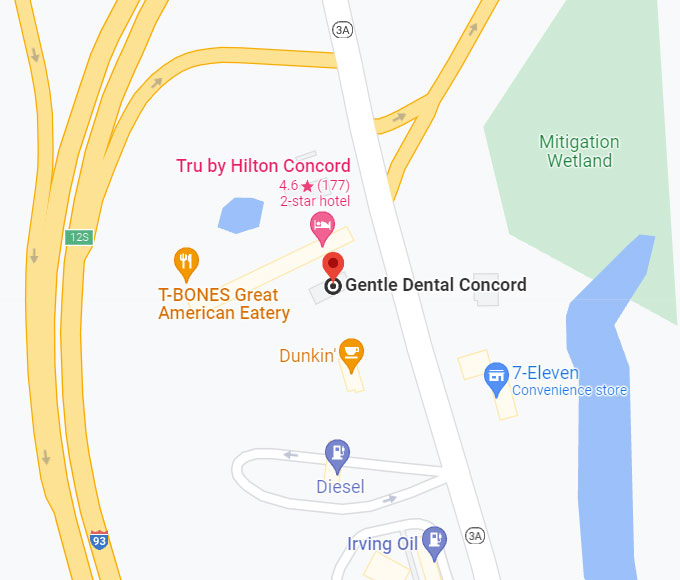
Parking lot on-site.
We are now Welcoming All Gentle Dental Concord Hospital Patients
Gentle Dental Concord Hospital, 246 Pleasant St, Concord, NH 03301 will be merging with Gentle Dental Concord, 410 South Main Street, Concord, NH 03301. The Concord Hospital location will be closed.
Parking lot on-site.
We are now Welcoming All Gentle Dental Concord Hospital Patients
Gentle Dental Concord Hospital, 246 Pleasant St, Concord, NH 03301 will be merging with Gentle Dental Concord, 410 South Main Street, Concord, NH 03301. The Concord Hospital location will be closed.
Concord, NH

It was a welcoming atmosphere created by the people in there, from the receptionists to the doctors. Got my teeth cleaned for the first time, and they explained the procedure to me in detail. They are good at their work. I will recommend them to anyone!
Concord, NH
Great appointment! My dental hygienist was kind, gentle and quick. Dentist was also very nice and caring. Answered my questions
An impacted wisdom tooth does not fully emerge because it is blocked by the gums, bone or another tooth. It may remain completely beneath the tissue or partially break through the gumline.
Impacted teeth do not always cause immediate discomfort. However, their position can make monitoring and cleaning difficult. The dental team will use an examination and imaging to determine whether removal or continued observation is appropriate.
A partially erupted wisdom tooth may leave a flap of gum tissue around the tooth. Food particles and bacteria can collect beneath this tissue and contribute to soreness, swelling or infection.
If the inflammation continues or returns after conservative care, the dentist may recommend removing the tooth to address the underlying problem.
Wisdom teeth are positioned at the back of the mouth, where brushing and flossing may be difficult. Decay can develop in the wisdom tooth or the neighboring second molar when plaque and food remain in the area.
Extraction may be recommended when the wisdom tooth cannot be cleaned or restored predictably.
A wisdom tooth that grows at an angle may press against the tooth in front of it. This position can make the area difficult to clean and may contribute to decay, gum problems or damage involving the neighboring molar.
Digital imaging helps the dental team examine the relationship between the wisdom tooth, adjacent teeth and surrounding bone.
In some cases, a fluid-filled sac or another change can develop around an impacted tooth. These findings may damage nearby bone or teeth if they continue to grow.
The dentist or oral surgeon will explain the imaging findings and whether surgical removal or another form of care is necessary.
Severe pain, facial swelling, fever, difficulty opening the mouth or problems swallowing may require prompt dental evaluation. These symptoms do not automatically mean that an immediate extraction will be performed.
Patients seeking emergency wisdom tooth removal in Concord should contact Gentle Dental Concord for an urgent assessment. The dental team will evaluate the problem and determine the safest and most appropriate next step.
Removing a wisdom tooth that is infected, impacted or pressing against nearby structures can address the source of ongoing discomfort. Tenderness and inflammation caused by a partially erupted tooth may also improve after the area has healed.
The dentist will confirm that the wisdom tooth is responsible for the symptoms before recommending treatment.
The second molar sits directly in front of the wisdom tooth. A poorly positioned third molar can create an area where plaque, bacteria and food debris collect between the teeth.
Removing the problematic wisdom tooth may improve access for cleaning and help protect the neighboring tooth from decay or gum damage.
Gum tissue around a partially erupted wisdom tooth can become repeatedly inflamed or infected. Extraction removes the tooth and the difficult-to-clean space associated with the recurring problem.
Patients will still need to maintain daily brushing, flossing and routine dental visits after treatment.
A wisdom tooth that is angled, crowded or only partly visible may be difficult to brush and floss effectively. Removal may make the back of the mouth easier to clean once the surgical area has healed.
The dental team can recommend oral hygiene techniques that protect the extraction site during recovery and support the remaining teeth afterward.
The method used to remove a wisdom tooth depends on whether the tooth has erupted, how it is positioned and whether gum or bone covers it.
A simple extraction may be appropriate when the wisdom tooth has fully erupted and can be accessed above the gumline.
The dentist numbs the treatment area, loosens the tooth with dental instruments and removes it from the socket. The clinical team then examines and cleans the area before placing gauze.
Surgical removal may be necessary when a wisdom tooth is impacted, partially erupted or covered by gum tissue or bone.
The dentist or oral surgeon creates an opening in the gum to reach the tooth. A small amount of surrounding bone may need to be removed, and the tooth may be divided into sections so it can be taken out with less disruption to the surrounding area.
Stitches may be placed when needed. Some sutures dissolve as the surgical site heals, while others may require removal during a follow-up appointment.
The dental team may recommend removing one wisdom tooth or several teeth based on their position and condition. Multiple wisdom teeth can sometimes be treated during the same appointment, but this approach is not appropriate for every patient.
Your dentist or oral surgeon will explain the proposed treatment plan, expected procedure and recovery considerations before scheduling surgery.
The consultation begins with a review of your concerns and an examination of the wisdom teeth, gums and neighboring molars. The dental team may ask about pain, swelling, difficulty chewing or previous infections.
Digital X-rays help show whether the wisdom teeth are erupted, angled or impacted. Imaging also helps the dentist or oral surgeon evaluate the roots and their relationship to nearby structures.
Tell the dental team about medical conditions, allergies, medications, supplements and previous reactions to anesthesia or sedation. This information helps the clinician plan the procedure and reduce avoidable risks.
Patients should follow the specific instructions provided by the oral surgery team. Do not stop a prescribed medication unless the prescribing clinician and dental provider have advised you to do so.
Local anesthesia is used to numb the treatment area. Depending on the complexity of the extraction, the patient’s health and the treatment plan, additional sedation options may be discussed.
Gentle Dental’s wisdom tooth extraction information identifies local anesthesia, nitrous oxide and intravenous sedation as possible options for surgical treatment. The dentist or oral surgeon will explain which options are available and appropriate for your procedure.
Preparation instructions vary according to the type of anesthesia or sedation. Follow the eating, drinking, medication and transportation instructions provided before your appointment.
For an erupted wisdom tooth, the dentist loosens the tooth and carefully removes it from the socket. The area is then inspected and cleaned.
Gauze is placed over the socket to control bleeding and support blood clot formation. Stitches are not required for every simple extraction.
For an impacted tooth, the clinician creates an opening in the gum tissue to access the tooth. Bone covering the tooth may be removed when necessary.
The tooth may be separated into smaller sections before removal. The clinician then cleans the surgical site, places stitches when appropriate and positions gauze over the area.
Before you leave, the clinical team will check the treatment area and explain how to manage bleeding, swelling, discomfort, eating and oral hygiene.
Patients who receive sedation may need a responsible adult to drive them home and remain available during the early recovery period. Follow the transportation instructions provided by the oral surgery team.
Recovery varies according to the number of teeth removed, the degree of impaction, the surgical approach and the individual patient’s health. Swelling, tenderness, minor bleeding and jaw stiffness may occur during the early healing period.
Following the instructions provided by the dental team can help protect the surgical site and reduce the risk of complications.
Bite gently on the gauze placed over the extraction site for the amount of time recommended by the clinical team. Replace it only as directed.
Some oozing may occur after surgery. Contact the office if bleeding is heavy, does not slow or causes concern.
The oral surgery team may recommend cold packs and appropriate medication to help manage early swelling and discomfort. Use medications only as directed.
Swelling can change during the first several days. Contact the office if pain or swelling becomes severe, worsens after initially improving or does not follow the expected recovery pattern explained by your clinician.
Soft foods can reduce pressure on the extraction site while it begins to heal. Choose foods that require minimal chewing and follow any additional dietary instructions from the clinical team.
Avoid hard, sharp, crunchy or sticky foods that could irritate the area or become trapped in the socket. Allow hot foods and beverages to cool before consuming them.
A blood clot forms in the socket after extraction and protects the underlying tissue during healing. Dislodging this clot can lead to a painful complication called dry socket.
Do not use a straw, smoke, vape or rinse forcefully during the period specified by your dentist or oral surgeon. Avoid touching the area with your fingers, tongue or other objects.
Continue cleaning the unaffected areas of your mouth according to the instructions you receive. Avoid brushing directly over the surgical site until the dental team tells you it is appropriate.
Gentle rinsing may be recommended after the initial healing period. Do not use forceful swishing because it may disturb the protective clot.
The amount of time needed away from work, school or exercise depends on the complexity of the extraction and the demands of your normal activities.
Avoid strenuous activity until your dentist or oral surgeon confirms that it is appropriate. Increased physical activity may contribute to bleeding, throbbing or swelling during early recovery.
A follow-up appointment may be recommended to evaluate healing, remove nondissolving stitches or address concerns. Keep the appointment even when the area appears to be healing normally.
Contact Gentle Dental Concord before the scheduled follow-up if you develop a concern that should be evaluated sooner.
Some tenderness, swelling and minor bleeding can occur after wisdom tooth extraction. Contact the dental office when symptoms are more severe than expected or become worse instead of gradually improving.
Seek prompt dental or medical attention for:
The dental team can determine whether the symptoms are part of normal healing or require additional treatment.
Gentle Dental Concord provides oral surgery and wisdom teeth extraction services at its South Main Street location. The office treats impacted and painful wisdom teeth and can determine whether a simple or surgical extraction is required.
Patients can begin with an evaluation at the same office where treatment and follow-up care may be coordinated.
The Concord office uses low-radiation digital X-rays, digital modeling, intraoral cameras and 3D scanning. These tools help the dental team examine the position of the wisdom teeth and plan care around the surrounding teeth and bone.
The clinician will determine which type of imaging is necessary for your consultation.
Gentle Dental Concord is a multispecialty practice that provides general and specialty dental care. This structure can support coordination when a patient is referred from a routine examination to an oral surgery evaluation.
Related dental concerns can also be reviewed as part of a broader treatment plan when needed.
The Concord office provides emergency dental evaluation for pain and other urgent oral health concerns. Patients with sudden wisdom tooth pain or swelling should call the office so the dental team can assess the situation.
Emergency evaluation does not guarantee that extraction will be completed during the same visit. The treatment decision depends on the examination, imaging and the patient’s health.
Gentle Dental Concord accepts many dental insurance plans. Wisdom tooth removal benefits vary according to the patient’s plan, the number of teeth being treated and the complexity of the procedure.
The office can help review available benefits and payment options. Schedule a consultation to receive treatment-specific information and an individualized estimate.
Patients receive instructions based on the type of extraction, anesthesia and surgical findings. The dental team can also arrange follow-up care when it is needed.
Contact the office if questions arise during recovery rather than changing the care plan without clinical guidance.
Finding the right dental care shouldn’t mean driving all over New Hampshire. At our Concord office, you’ll find everything you need in one place—from routine cleanings to implants and orthodontics. We combine modern technology with a comfortable, patient-first approach. Whether you’re coming in for cosmetic care or need a same-day emergency visit, our team is here to make your experience as easy as possible.
The dentist or oral surgeon will examine your mouth, review your dental and medical history and use digital imaging to assess the position of the wisdom teeth. Not every wisdom tooth needs to be removed.
A simple extraction may be used when the tooth has fully erupted and is accessible above the gums. Surgical extraction may require an incision, bone removal or dividing an impacted tooth into sections.
Local anesthesia is used to numb the area. Nitrous oxide or intravenous sedation may also be considered based on the procedure, patient health and clinical recommendation. The oral surgery team will confirm the available option during the consultation.
Yes. The Concord office provides emergency dental evaluations for pain and other urgent concerns. Call the office if you develop sudden pain or swelling. An urgent assessment does not guarantee that extraction will be performed during the same visit.
No. Wisdom teeth that grow normally, remain healthy and can be cleaned may not require extraction. Your dentist will recommend monitoring or removal based on the tooth position and potential oral health risks.
Soft foods that require minimal chewing are generally easier to manage during early recovery. Avoid hard, crunchy, sticky or very hot foods until the dental team advises that you can return to your regular diet.
Follow the aftercare instructions, avoid smoking or vaping, do not drink through a straw and avoid forceful rinsing. These actions help protect the blood clot that forms in the extraction socket.
Coverage varies by insurance plan, the number of teeth removed and the complexity of treatment. The Concord office can help review your benefits, but insurance payment cannot be guaranteed.
If your request is a dental emergency, or you would like to call and schedule your dental appointment, contact information for our offices can be found here: Gentle Dental Locations. New patient offer not valid for emergency appointments.

What is a wisdom tooth?Although wisdom teeth have nothing to do with wisdom, it ...

You probably know someone who has had a tooth extraction, as it is a common dent...

How much to pull a tooth? Tooth extraction costs can vary based on the type of t...

