New Patient Offer
$79
A $400+ Value
- Exam
- X-rays
- Cleaning
- Treatment Plan


Searching for teeth whitening products that actually work? Your dentist is the best person to help you choose a whitening option that is both safe and effective for your smile. The best teeth whitening products for each person depends on factors like current tooth shade, budget, tooth sensitivity, and smile goals and needs. There are numerous professional and over-the-counter (OTC) whitening options available that are supported by great consumer product reviews and dental expert opinions.

Teeth whitening effectiveness is usually highest with professional in-office treatments, such as Zoom Whitening, GLO Whitening, or Opalescence Pro. These treatments use stronger whitening ingredients than OTC products and are performed under your dentist's supervision. In-office whitening can provide the fastest and most noticeable change in tooth color, making it a good choice if you're looking for a brighter smile quickly.
Because the whitening gel is stronger, some people may experience temporary tooth sensitivity or gum discomfort. Your dental team can help manage sensitivity and schedule touch-up visits if needed.
Professional take-home whitening is another reliable option for people who want noticeable results on a convenient schedule. Your dentist may provide custom-fit trays and professional whitening gel, such as Opalescence PF Custom Tray Kits or Philips Zoom take-home system.
Although results take longer than in-office treatment, take-home whitening often causes less sensitivity because it uses lower concentrations of whitening ingredients. Your dentist can monitor your progress and provide more gel as needed for touch-ups.
OTC whitening products can also brighten teeth, especially for small surface stains from beverages like coffee or tea, or tobacco use. In general, whitening strips, gels, pens, and toothpastes are not as effective as professional options, but can be more affordable and convenient. It can be helpful to read product reviews and look for products with the ADA Seal of Acceptance, which the American Dental Association (ADA) has reviewed for safety and efficacy.
Many OTC products like Crest 3D Whitestrips, Opalescence Go, and Colgate Optic White Pro Series Express White toothpaste may be effective when used as directed, but professional guidance is the best way to choose a safe whitening treatment that's best for your smile.
The best teeth whitening from home should be safe, effective, convenient, and simple to use. Before using any whitening treatments, it is important to consult with your dental professional. In addition, follow your dentist's and the product's instructions and inform them promptly if you develop any concerning symptoms or side effects.
Based on user satisfaction and overall effectiveness from reviews, here are a few OTC teeth whitening options to consider:
| Product | Consumer Rating | Average price | Special features |
|---|---|---|---|
| Opalescence Go™ Prefilled Whitening Trays | 4.4/5 | $84–$92 |
|
| Crest 3D Whitestrips Professional Effects Kit | 4.5/5 | $45–$55 |
|
| Colgate Optic White ComfortFit LED | 4.1/5 | $50–$70 |
|
Your dental professional is an excellent resource to help you search for the best teeth whitening kit. Professional whitening kits and in-office treatments use higher concentrations of whitening ingredients for greater efficacy than online or store-bought products. Not to mention, the treatment is supervised by your dental professional, helping ensure safety and the ability to customize your results. Prescription whitening provided by your dentist is also the fastest option to achieve noticeable and long-lasting results.
Great Lakes Family Dental uses top-rated in-office and professional take-home teeth-whitening products including Zoom, Glo Whitening,Opalescence and Colgate. In-office treatments are completed in a single visit, with results seen approximately within 30 to 60 minutes. Professional take-home whitening kits are an alternative option that uses custom-fitted trays and high prescription-strength whitening concentrations for patients looking to whiten their teeth gradually at home over a few weeks under dental supervision.
Professional teeth whitening costs vary based on different factors such as the type of whitening treatment, technology used, your dentist's geographical location, and the severity of tooth discoloration present. In-office treatments cost on average between $300 to $1,000 per session. While prescription-strength at-home kits costs range between $100 and $600 on average.
Professional teeth whitening benefits include faster, longer-lasting, and more dramatic results in contrast to at-home products. Since treatment is provided and monitored by a dental professional, stronger whitening ingredients can be used safely. Higher whitening ingredient concentrations can make teeth several shades lighter in a single office visit.
Your dentist also uses protective equipment to keep your gums and other oral tissues safe during treatment. Customization is also another perk of professional teeth whitening. Your dentist can tailor the whitening strength to your tooth shade goals.
The main drawback of professional whitening is typically the higher cost. Over-the-counter whitening products are more affordable and readily available online or in stores. However, they generally produce less noticeable and shorter-lasting results. They are not supervised by a dentist and may not fit your teeth or mouth precisely, which can increase the likelihood of tooth sensitivity, gum damage, and uneven whitening.
| Feature | Professional In-Office Treatments | At-Home Store-Bought Products |
|---|---|---|
| Pros |
|
|
| Cons |
|
|
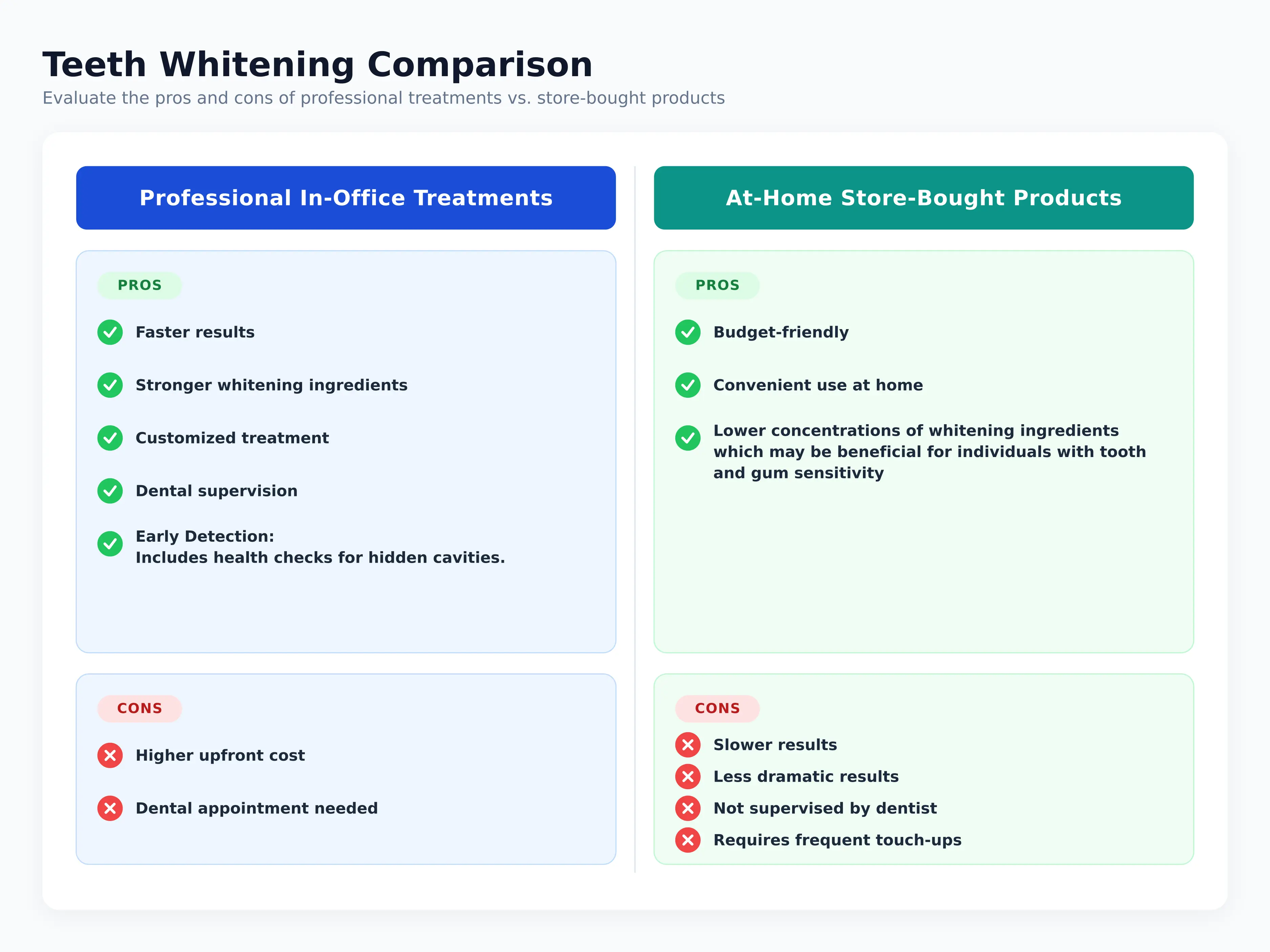
Over-the-counter whitening products, including whitening strips, gels, and toothpaste, are highly accessible online and in-store to conveniently use at home. They are generally effective at improving mild tooth discoloration and breaking down limited surface stains caused by items like coffee, tea, red wine, and tobacco.
However, they typically contain lower concentrations of whitening ingredients than professional treatments, causing results to be more gradual and less dramatic than dentist-supervised whitening.
Top-rated best whitening strips from popular brands like Crest are thin, flexible, and designed to stick to the front surfaces of the teeth for a specified amount of time each day. Whereas, whitening gels may be applied with a brush, pen, or tray.
Whitening toothpastes also help remove surface stains but may produce more gradual and less noticeable tooth color change than whitening strips, gels, or professional whitening treatment.
The main ingredients in OTC whitening products are hydrogen peroxide and carbamide peroxide. Hydrogen peroxide is a bleaching agent that quickly the breaks down stains and helps improve tooth discoloration. Carbamide peroxide breaks down into hydrogen peroxide, but works more slowly to eliminate stains, which helps extend the whitening effect.
Some OTC products also contain ingredients like potassium nitrate and fluoride, which help reduce potential tooth sensitivity by calming the nerves within teeth.
Home Teeth Whitening Comparison
There are many at-home teeth whitening products to choose from, including whitening strips, gels, toothpastes, over-the-counter kits, dentist-provided take-home kits, and LED whitening devices. Each option varies based on factors including cost, whitening effectiveness, how long results may last, and potential side effects.
Whitening Products Analysis
In general, dentist-provided take-home whitening kits are the most effective and longest-lasting at-home option. Whitening toothpastes tend to provide the mildest and shortest-lasting results because they mainly remove surface stains rather than change natural tooth color.
At-home whitening costs vary widely. Whitening costs range on average between $10 to $55 for strips and gels, $1to $20 for toothpastes, and $30 to $150 for LED whitening devices. Over-the-counter whitening kits range from $20 to $100 for OTC kits, while dentist-provided take-home kits cost approximately between $150 to $600.
The main potential side effects for whitening products are tooth sensitivity and gum irritation, especially if not used as directed or the whitening material touches the gums or soft tissues.
| Product Type | Avg. Cost | Effectiveness | Results Duration | Side Effects |
|---|---|---|---|---|
| Whitening strips | $10–$55 |
| 3 to 6 months |
|
| Whitening gels | $10–$55 |
| 3 to 6 months |
|
| Whitening toothpaste | $1–$20 |
| 1 to 4 months |
|
| Whitening kits | $20–$100 for OTC kits, $150–$600 for dentist-provided kits |
| OTC kits: 4 to 6 months dentist-provided kits: 6 months to 1 year |
|
| LED whitening devices | $30–$150 |
| 3 to 6 months |
|
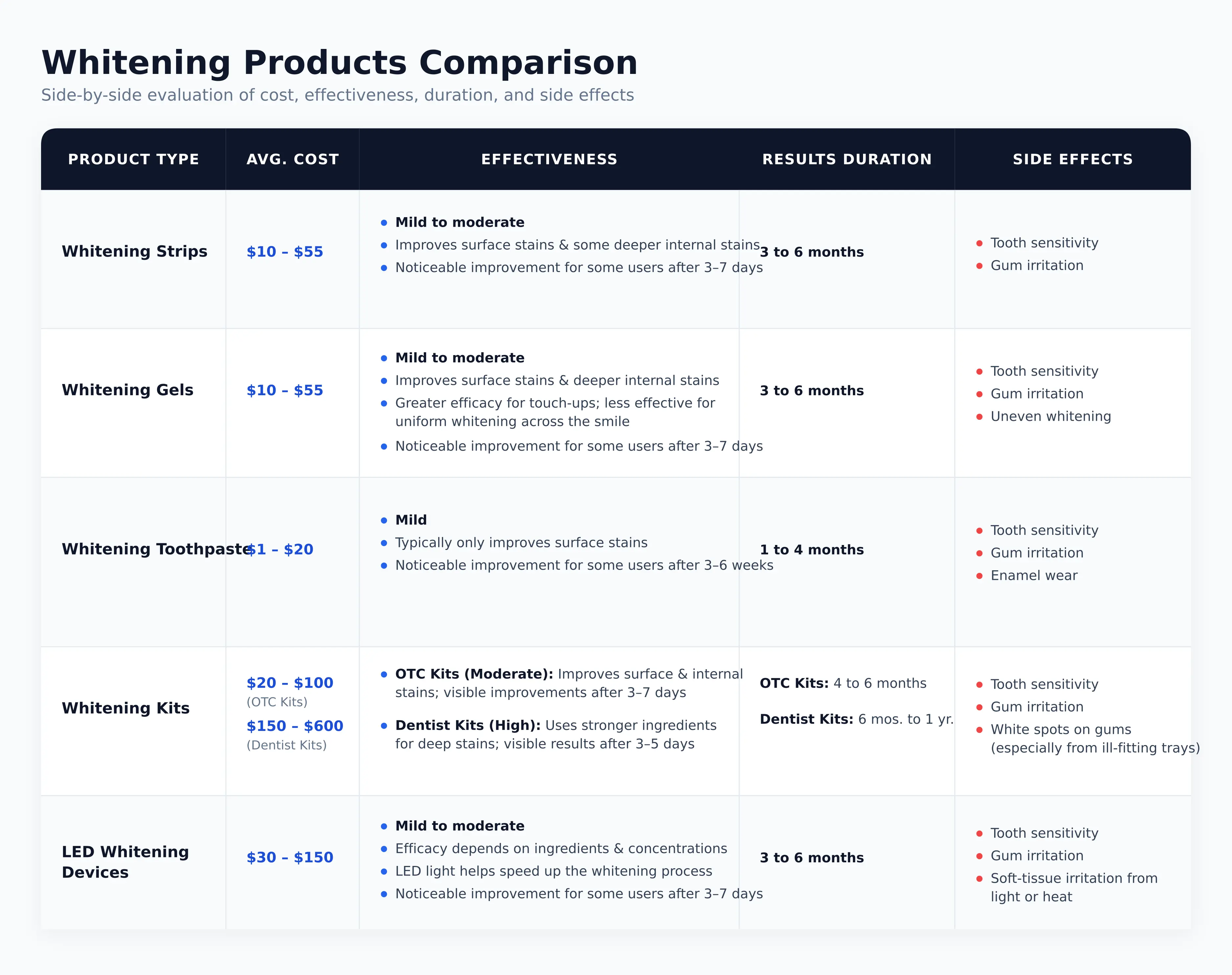
Over-the-counter whitening products for at-home use are usually significantly less expensive than professional whitening procedures. However, professional whitening treatments offers superior results, delivering faster, more noticeable, and longer-lasting whitening effects.
Professional whitening treatments are also monitored by your dental professional for improved safety and tailored treatment. Before starting any whitening treatment, talk with your dental provider who can discus cost-effective options that match your budget and goals.
Gentle Dental Group offers in-office and take-home whitening options, including Zoom, GLO, and Opalescence. Our team can recommend the best option for your tooth shade, sensitivity level, and budget.
Before starting any whitening treatment, it is important to prioritize safety by consulting your dental professional. They can provide safe teeth whitening options and recommendations for choosing whitening products right for your smile.
If you've chosen over-the-counter products like whitening strips, gels, kits, and toothpastes, look for the American Dental Association's Seal of Acceptance. ADA-approved whitening products have undergone strict evaluation for safety and efficacy. Also, read the ingredients and their concentrations on the label and avoid products with unknown ingredients.
Teeth whitening products may function by different whitening mechanisms (whitening vs. bleaching). Some whitening products, like many toothpastes, contain ingredients that remove surface stains to help restore natural tooth shade, such as those caused by foods, drinks, or tobacco.
On the other hand, some products use bleaching ingredients like hydrogen and carbamide peroxide to lighten the natural shade of the teeth. Bleaching products tend to be recommended for more complex tooth discoloration and deeper stains. Your dental professional can help you choose the best type of whitening for your dental needs and smile goals.
Best Teeth Whitening Products for Sensitive Teeth
Patients with sensitive teeth may still safely benefit from teeth whitening when supervised by a dental professional. Whether you suffer from chronic sensitivity to mild sensitivity or none at all, it is important to consult a dentist before beginning any whitening procedure. Your dentist can recommend the best whitening for sensitivity that's tailored to your exact smile.
Teeth whitening for sensitive teeth involves gentle whitening products, typically with lower peroxide concentrations and desensitizing ingredients like potassium nitrate or fluoride. Tooth sensitivity may occur during whitening as ingredients penetrate through the tooth layers, opening small channels that connect to the tooth's nerves. Sensitivity may be more noticeable when exposed to triggers like hot or cold temperatures, and sweet foods.
Top whitening picks for sensitive teeth include:
There is an abundance of home remedies for white teeth available on social media. Questions like ‘does baking soda whiten teeth?’ or ‘how can I naturally whitening my teeth?’ may have crossed your mind. Popular natural methods include oil pulling, baking soda, activated charcoal, and hydrogen peroxide rinses. However, evidence on clinical safety and efficacy for these natural teeth whitening alternatives is limited. Before trying home remedies, consult with your dental professional.
When looking for products online and in-store, choose products with ADA Seal of Acceptance, which have been reviewed for safety and efficacy by the American Dental Association. Professional treatments provided by your dentist offer superior results that are dentist-supervised, faster, more dramatic, and longer-lasting.
Maintaining whitening results can go a long way with good dental hygiene, routine professional dental care, and healthy lifestyle habits. At home, brush twice a day for two minutes using a soft-bristled toothbrush. Ask your dentist about recommendations for toothpastes with ingredients like fluoride and whitening agents.
Floss daily to remove stain and cavity-causing plaque
and food debris from in between your teeth. Regular check-ups and cleanings are important to keep your smile healthy and bright. Your team of professionals will provide personalized dental hygiene tips for extending whitening effects and maintaining your oral health.
Do your best to limit foods and drinks that can cause stains, such as coffee, tea, red wine, and tobacco. When drinking dark liquids, use a straw to avoid contact with your teeth. Stay hydrated with water throughout the day, especially rinsing after consuming staining foods and beverages. Avoid habits like smoking, vaping, or using other tobacco products, which have numerous negative health effects and contribute to teeth staining.
In general, teeth whitening is considered safe when used as directed with dental supervision. But as with any procedure, potential risks and side effects exist. One of the most common side effects is temporary tooth sensitivity, which can feel like a quick tooth ache when eating or drinking something hot, cold, or sweet. Individuals with existing tooth sensitivity or gums, gum recession, or worn tooth enamel may be even more likely to experience discomfort.
Sensitivity issues may occur because whitening ingredients like hydrogen peroxide or carbamide peroxide may trigger the tooth’s inner nerve channels. Other teeth whitening risks include gum irritation or gum discoloration if the whitening gel touches soft tissue. To minimize risks, always inform your dentist before beginning whitening treatment.
If you notice swelling, pain, sensitivity, irritation, white patches on your gums, or other side effects, stop using the whitening products and inform your dentist. Your dentist may evaluate your teeth and gums and offer recommendations like alterative treatment options with lower-strength ingredients, using whitening for shorter periods, custom-fit trays to provide a protective barrier for your gums, or toothpastes with ingredients like potassium nitrate or fluoride to help reduce tooth sensitivity.
Dental experts support teeth whitening as safe and effective when used appropriately and supervised by a dental professional. A professional evaluation should be performed prior to beginning any whitening treatment to ensure whitening is appropriate for your smile.
Existing conditions like cavities, gum disease, gum recession, or tooth sensitivity must be addressed before whitening. Once you are ready for whitening, it’s essential to follow the product and dentist’s instructions.
As with any treatment, tooth whitening has potential risks and side effects. Common side effects include temporary tooth sensitivity to hot, cold, or sweet foods and beverages, and mild gum irritation. Fortunately, these symptoms usually go away on their own.
However, if you develop severe or long-lasting signs or symptoms, it is important to contact your dentist immediately. Be aware that whitening cannot change the color of existing dental restorations, such as cavity fillings, veneers, and crowns. Dentist-supervised whitening can help you minimize risks and tailor treatment to your exact needs.
Find a Gentle Dental Group location near you and ask about our professional whitening options and new patient offers.
Most whitening products contain hydrogen peroxide or carbamide peroxide as key ingredients, which help remove dark stains on natural teeth. These ingredients are found in higher concentrations when provided by your dental professional for in-office procedures and professional prescription-strength at-home whitening kits. Potassium Nitrate and fluoride are also sometimes added to whitening products to help reduce tooth sensitivity.
You should always consult with your dental professional prior to using teeth whitening products. Dental supervision is recommended when using whitening products to help ensure whitening is safe and appropriate for your oral health. Teeth whitening products should only be used as directed to avoid complications like tooth enamel damage, gum irritation, tooth sensitivity, and other dental problems.
Teeth whitening products are generally safe when used as directed and under the guidance of a dental professional. Long-term or inappropriate use of whitening products can lead to tooth sensitivity, gum irritation, enamel damage, and other dental complications. Your dentist can recommend whitening options and an appropriate schedule based on your oral health and individual needs. Most dentists recommend professional whitening no more than once or twice a year. Take-home and over-the-counter whitening products should be used only as instructed.
Professional whitening options are supervised by a dental professional and may provide faster, more predictable results than over-the-counter products. These treatments often use stronger whitening ingredients and may be completed in the dental office or provided as a dentist-supervised take-home kit. Over-the-counter products, like whitening strips, toothpastes, and store-bought kits, are often less expensive. However, they are typically less effective and take longer to see results.
Having sensitive teeth or gums does not necessarily mean you cannot whiten your teeth. However, it is important to talk with your dentist before using any whitening product. Your dentist can examine your teeth and gums to find out what may be causing your sensitivity. In some cases, you may need treatment for issues such as cavities, gum recession, or gum disease before whitening is recommended. If you are a candidate for teeth whitening, your dentist can help make the process more comfortable. They may recommend a gentler whitening method, a product with a lower concentration of whitening ingredients, shorter treatment times, or a sensitivity-relief product to use before or during whitening.
Whitening results can vary from person to person, depending primarily on factors like the type and severity of tooth discoloration, age, genetics, tooth enamel thickness, and oral health. Tooth stains that are deep within the tooth, often due to aging, medications, or dental trauma, are harder to lighten than outer surface stains from foods or beverages. In addition, individuals with a thinner enamel layer are naturally more yellow in color and may not whiten as well as individuals with thicker enamel. Teeth whitening products do not change the color of dental restorations such as fillings, veneers, or crowns.

Dental implants play an important role in supporting your overall dental health…

For many, cost can make it challenging to complete necessary dental treatment.…
Understanding how oral health affects overall health can help you protect your…
49 Convenient Locations throughout Massachusetts and New Hampshire